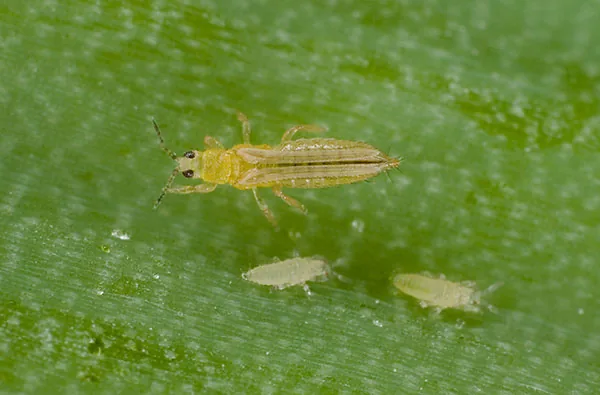
Field Identification
If new growth is curling, yellowing, sticky, or chewed, onion thrips may already be on the plant. This pest often builds quietly, then damage appears all at once. Feeding stress weakens growth, reduces yield, and opens the door to secondary disease. Early cleanup is much easier than fighting a full population surge later.
Inspect the newest growth first: leaf undersides, flower buds, stem joints, and tender tips where pests gather. Look for body shape, color, eggs, cast skins, honeydew, webbing, or fresh puncture marks. A hand lens and a white paper tap test help reveal small life stages. Matching visible pests with fresh plant damage confirms active infestation.
Not sure what you have? Use the symptom diagnosis tool →
How to Deal With It
Organic Control Methods
Minute pirate bugs and lacewing larvae hunt onion thrips on leaves when humidity stays high enough and sprays do not kill them daily. Parasitic wasps attack thrips in some systems; results swing with species. Predatory mites help in tunnels more than open fields. Buying predators works only if you stop broad-spectrum sprays long enough for them to eat -- a calendar pyrethrin program buys dead predators and live thrips.
Inspect seedlings and leaf bases weekly with a hand lens -- silvery streaks show up before populations explode. Blue or yellow sticky cards at canopy height track flights in tunnels. Rotate Allium blocks so thrips do not meet continuous hosts. Remove crop residue that holds pupae in soil; clean high tunnels between successions.
Reflective silver mulch disorients thrips moving into rows in bright sun -- pair with irrigation so mulch does not blow away. Avoid excess nitrogen that pushes ultra-succulent leaves; thrips rasp softer tissue faster. Keep soil moisture even; drought-stressed onions show damage sooner. In dry climates, overhead irrigation briefly suppresses adults; balance with disease scouting.
Fine mesh netting over hoops stops thrips on young transplants when every seam seals. Sticky traps monitor; they rarely control alone. A stiff water blast dislodges thrips before they tuck into leaf axils -- repeat every few days during flare-ups.
Insecticidal soap, neem, and horticultural oils contact thrips on leaf surfaces -- spray to drip, especially leaf bases and scapes. Repeat on short intervals while generations overlap. Spray at dusk to reduce sunburn and to spare daytime hunters. Rotate modes of action in greenhouses to slow resistance.
Let Nature Handle It
Natural Enemies
- Minute Pirate Bugs
- Lacewings
- Parasitic Wasps
Threat Map