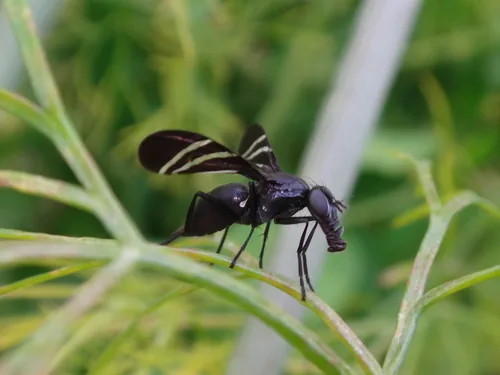
Field Identification
If leaves show trails, fruit turns soft, or roots collapse from inside, onion fly may already be feeding. The larval stage does most of the damage, often hidden where you cannot see it at first glance. By the time yellowing or rot appears, feeding may be well underway. Move quickly when symptoms begin to prevent another wave of eggs and larvae.
Watch for tiny eggs near plant tissue, pale legless larvae inside mines or fruit, and sudden soft spots or tunnels. Adults are usually small flies that hover or dart when disturbed. Check around wounds, blossoms, and moist plant debris where egg-laying is common. Cut open suspect tissue: live maggots or fresh tunnels are the clearest field confirmation.
Not sure what you have? Use the symptom diagnosis tool →
How to Deal With It
Organic Control Methods
Rove beetles and ground beetles scavenge eggs and young maggots at the soil line. Parasitic wasps such as Aphaereta species attack pupae in soil when diverse fields support them. Steinernema feltiae nematodes infect larvae in moist soil when temperatures stay in range. Nematodes and wasps starve if you spray pyrethrin weekly across bare dirt between rows.
Avoid fresh manure before allium beds; it attracts flies and holds moisture oddly. Use clean sets and transplants from reputable sources. Scout stem bases for eggs in soil cracks after rain -- first flags are often nothing, then sudden collapse. Map problem fields and deep-plow residue only where erosion rules allow.
Rotate alliums on at least a three-year cycle in gardens; longer on organic farms with history. Delay planting until soils warm so seedlings size up before peak fly windows. Interplanting carrots does not hide onions from flies -- use rotation and covers instead. Destroy culls and bolting onions that perfume the air for miles.
Floating row covers sealed at soil line exclude females completely on home scales -- vent on hot days so onions do not cook. Fine mesh over seedbeds until plants size up stops early flights. Stem collars add insurance when combined with sanitation.
Spinosad or neem directed at the base of plants during egg-laying windows contact adults resting low -- spray calm evenings. Insecticidal soap has limited reach below leaves; focus spray on soil line and repeat after heavy rain per label. Soil drenches pair with nematodes when labels allow. Combine any spray with row cover removal only when you accept risk.
Let Nature Handle It
Natural Enemies
- Parasitic Wasps (Braconidae)
- Rove Beetles (Staphylinidae)
- Ground Beetles (Carabidae)
- Entomopathogenic Nematodes
Threat Map