About
Eggplant (Solanum melongena) is a warm-season plant grown for its glossy fruits harvested before seeds become tough. It originates from tropical and subtropical regions of Asia and Africa and now thrives in many climates with steady heat. Plants typically form sturdy, branching growth 60–120 cm (24–47 in) tall, and in permaculture it earns its place as a high-output summer crop that also supports beneficial insects through its flowers while you maintain living soil with compost and mulch. Full sun for flowering and fruit set; shade leads to leaf-only disappointment. Water regularly during growth and early fruit sizing; avoid letting beds swing from dry to swamp. Prefers rich, well-drained soil amended with compost; heavy wet soil increases disease risk. Cold is the enemy: growth stalls when temperatures drop near 50°F (10°C). Seeds: start indoors 6–10 weeks before transplanting; germination commonly takes 5–10 days in warm conditions. Transplanting: move seedlings after danger of frost and once nights are warm; keep root balls intact. Optional succession: start a second batch 2–3 weeks later to spread harvest risk. Harvest fruits when they’re glossy and still tender, typically 70–90 days from sowing depending on cultivar. Cut fruit with a short stem to reduce tearing and bruising. Store cool and use quickly; eggplant gets bitter and spongy when left too long.
Permaculture Functions
- Edible: Glossy Solanum melongena fruits stay tender for roasting and baba ganoush when picked at full color before seeds harden -- bitterness spikes on drought-stressed plants left to oversize on the bush.
- Medicinal: Nasunin anthocyanin in purple skins tracks to antioxidant literature as food chemistry, not a clinic substitute -- anyone on nightshade-sensitive protocols should still treat fruit as solanaceous until their clinician says otherwise.
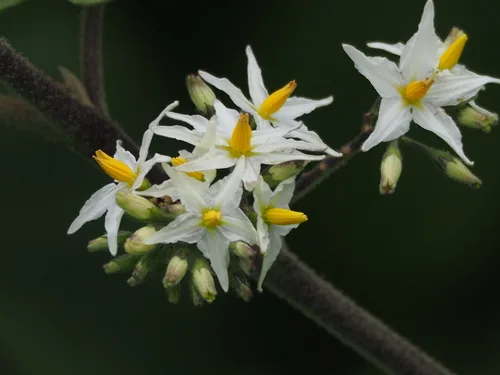
- Pollinator: Purple star-shaped flowers with prominent yellow anthers offer pollen loads to larger bees through peak heat -- when many other solanum rows have already stopped flowering.
Companion Planting
Threats & Pressure