About
Cilantro (Coriandrum sativum) is a cool-season annual herb grown for two harvests: fresh leafy greens (cilantro) and dried aromatic seeds (coriander). It is native to the Mediterranean region and parts of Southwest Asia, and it typically reaches 30–60 cm (12–24 in) tall depending on conditions. In permaculture, cilantro buys you quick returns from short seasons, and when it flowers it turns into a nectar supplier that helps support the rest of the garden’s insect crew. Full sun works in cool weather; partial shade helps slow bolting during warmer periods. Keep moisture steady for tender leaves; dry stress makes plants bolt faster. Prefers loose, fertile soil with compost; heavy compaction reduces flavor and growth. Manage heat: once hot spells start, leaf quality drops and flowering speeds up. Seeds: direct-sow outdoors when days are cool; germination commonly takes 7–14 days with consistent moisture. Succession sowing: repeat every 2–3 weeks to keep a continuous leaf harvest instead of one dramatic “all at once” bolting event. Transplant (optional): start indoors briefly, then transplant carefully to avoid root disturbance. Leaves: harvest early and often, before stems get tall; cut outer stems and let the plant regrow if possible. Seeds: let umbels dry on the plant until brown; cut, bag, and finish drying, then rub out seeds. Use fresh leaves for bright flavor; dry seeds for storage and grinding.
Permaculture Functions
- Edible: Cool-season leaves supply fresh salsa and curry garnish -- while later coriander seeds dry for spice mixes, pickles, and gin botanicals from the same annual.
- Medicinal: Leaf and seed oils show up in global traditions as cooling digestives and metal-chelating kitchen supports -- evidence quality varies by claim.
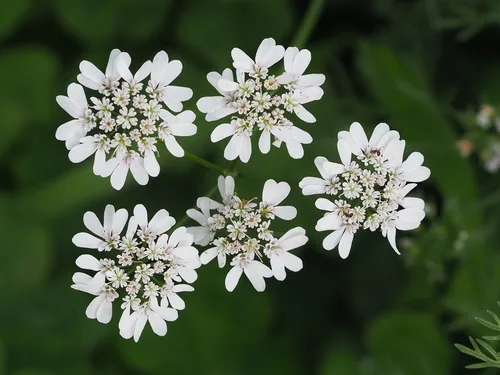
- Pollinator: Lacy white umbels feed tiny parasitic wasps, syrphid flies, and bees during the bolt phase -- when you stop plucking leaves for the kitchen.
Companion Planting