About
Quince (Cydonia oblonga) is a deciduous small tree native to southwestern Asia and the Caucasus region, grown for its intensely aromatic fruit and hard structure. It typically grows about 3–6 m (10–20 ft) tall and forms a dense canopy with textured leaves and spring blossoms that bring early-season pollinators. In permaculture, quince earns its place because it provides a distinct late-fall fruit harvest and turns pruning wood into biomass, while its sturdy framework can anchor layered plantings that need long-lived structure without constant replanting. Full sun is best for flowers and reliable fruit set; partial shade reduces yield. Water moderately while establishing; once established it handles dry spells better than many fruit trees. Prefers well-drained soil; soggy ground increases disease risk. Cold and heat tolerance varies by cultivar, but it generally fits temperate to warm-temperate systems. Seeds: collect from ripe fruit, cold-stratify for about 2–3 months; germination is slow and seedlings vary. Grafting/budding: most reliable for named cultivars and consistent fruit quality. Cuttings/suckers: take semi-hardwood cuttings in warm season; rooted suckers can be transplanted for faster starts. Harvest fruit when it reaches mature color and aromatic scent; it often stays firm until processed. Quince fruit is commonly cooked or processed (jams, paste, jellies) because raw fruit can be very astringent. Store fruit cool and dry for longer keeping; it keeps its fragrance.
Permaculture Functions
- Edible: Cydonia oblonga rock-hard fruit perfumes the kitchen while poaching into membrillo, paste, and aromatic stew bases -- harvest after golden color and strong fragrance even if flesh still fights a knife; long storage rewards patience.
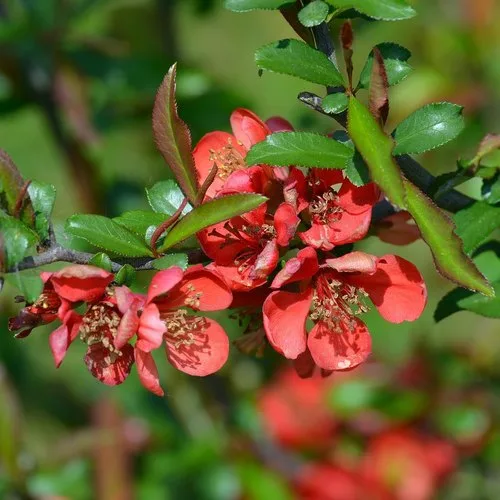
- Wildlife Attractor: Pale pink five-petaled spring cups feed early orchard bees before apples open -- dense twiggy crown gives cover for nesting songbirds once fruit drops feed wasps and thrushes in autumn.
- Ornamental: Fuzzy leaves, contorted branches, and large solitary blooms read as heirloom sculpture in courtyard corners -- quince holds a formal vase shape decades without the peach replant drama.
Companion Planting