About
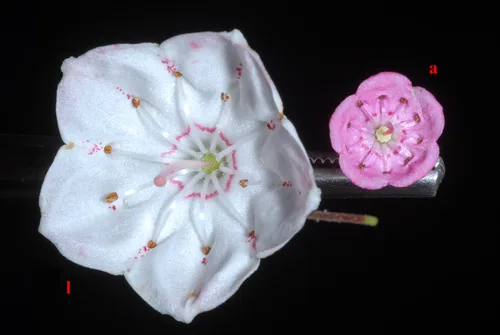
Mountain laurel (Kalmia latifolia) is an iconic evergreen shrub of eastern North American acidic forests, with leathery leaves and rounded clusters of cup-shaped pink or white flowers in late spring. Plants range from low mounds to small trees over 6 meters (20 feet) in ideal, humid, partially shaded sites. It is widely planted for foundation screens and naturalistic woodland gardens. It suits forest garden shrub layers, shaded retention pond buffers, and ridge-top plantings where soil stays acidic and air circulation limits leaf diseases. Provide partial shade in hot climates; morning sun with afternoon shade reduces winter burn. Moist, well-drained, humus-rich, acidic soil is essential; avoid dry sand or alkaline fill. Propagate from semi-hardwood cuttings under mist, or purchase container-grown liners. Seed is possible but slow; named cultivars are cloned. Deadhead spent blooms if aesthetics require; avoid heavy shearing that removes latent buds. Do not burn prunings indiscriminately; smoke can be irritating.
Permaculture Functions
- Ornamental: Glossy evergreen foliage and intricate flowers anchor shade borders -- reads native-authentic when paired with other ericads.
- Wildlife Attractor: Dense branching shelters birds; nectar supports specialist bee relationships -- place blocks away from livestock browse due to toxicity.
- Pollinator: Pocket-and-pollinator flower mechanics favor certain bees -- educational value for pollinator ecology tours on land trusts.
- Erosion Control: Fibrous roots stabilize wooded slopes after storms -- useful on shaded cuts where turf fails.
- Border Plant: Mounded form defines edges without tall shade -- underplant taller deciduous trees on north and east aspects.
Companion Planting
Threats & Pressure