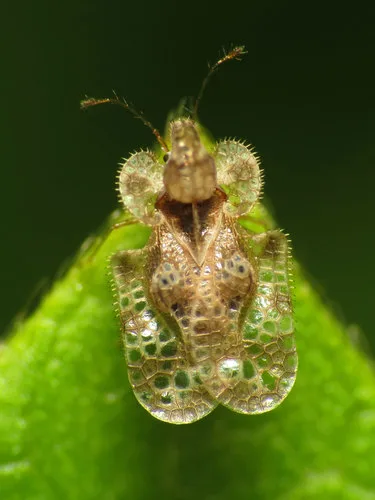
Field Identification
Lace bugs are small sap-feeding hemipterans with lacy patterned wings that live and feed on the underside of leaves. Their frass appears as dark varnish specks and heavy feeding causes bronzing or bleaching visible from above before leaves drop. Azalea, sycamore, oak, and many ornamentals host specialist species across temperate to subtropical climates. Hot dry weather speeds damage because plants cannot replace lost sap fast enough.
Turn leaves and use a lens: adults are flattened with ornate wings; nymphs are spiny and darker. Sticky excrement dots on the lower surface are diagnostic compared with spider mite stippling alone. Beat branches over white paper to dislodge adults. Separate from whitefly by the lack of a powdery wing cloud when disturbed.
Not sure what you have? Use the symptom diagnosis tool →
How to Deal With It
Organic Control Methods
Lace bugs have parasitoids including mymarid wasps that attack eggs in some systems. Minute pirate bugs and lacewing larvae feed on nymphs when they can reach them. Avoid broad-spectrum sprays during summer peaks so predators persist. Preserve nearby flowering plants for adult beneficials.
Choose resistant cultivars where breeding programs exist for your host plant. Avoid planting highly susceptible species in reflected heat next to paving. Rinse dust from foliage periodically so predators can move and hunt. Inspect nursery stock leaf undersides before purchase.
Prune interior water sprouts to improve spray coverage if you must treat. Remove the most damaged flushes on small shrubs to reduce nymph density. Mulch root zones to reduce drought stress stacked on top of sap removal. Do not over-fertilize with quick nitrogen during heavy infestations.
A strong water rinse knocks nymphs off leaves on sturdy plants -- repeat every few days during outbreaks. For houseplants, shower the entire plant focusing undersides. Vacuum is overkill but hand crushing adults on a few specimen leaves works on tiny patios.
Insecticidal soap and horticultural oil work on exposed nymphs when coverage is thorough on leaf undersides. Neem suppresses feeding when used on schedule. Spray at dusk to reduce beneficial insect contact. Test oil on sensitive cultivars first because lace bug hosts include many thin-leaved ornamentals.
Let Nature Handle It
Natural Enemies
- Parasitic Wasps
- Minute Pirate Bugs
- Lacewings
Threat Map