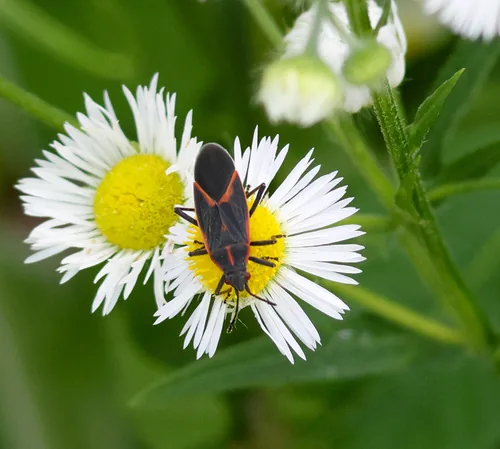
Field Identification
If new growth is curling, yellowing, sticky, or chewed, boxelder bug may already be on the plant. This pest often builds quietly, then damage appears all at once. Feeding stress weakens growth, reduces yield, and opens the door to secondary disease. Early cleanup is much easier than fighting a full population surge later.
Inspect the newest growth first: leaf undersides, flower buds, stem joints, and tender tips where pests gather. Look for body shape, color, eggs, cast skins, honeydew, webbing, or fresh puncture marks. A hand lens and a white paper tap test help reveal small life stages. Matching visible pests with fresh plant damage confirms active infestation.
Not sure what you have? Use the symptom diagnosis tool →
How to Deal With It
Organic Control Methods
Birds, spiders, and ground beetles pick off boxelder bugs at the margins, but nothing outdoors collapses a sun-warmed wall covered in thousands -- predators help steady pressure on nymph clusters on seed-bearing maples, not miracle cures. Diverse yard habitat supports generalists between flights. If you fog pyrethrin across siding weekly, you kill spiders and still see bugs next Tuesday.
Plan caulking and screen repairs in late winter before warm spring sun pulls overwintering adults to south-facing walls. Turn off bright porch lights during late-summer flight weeks so you are not calling every bug in the county to the door. Explain clearly that boxelder bugs do not eat houses for lumber -- management targets human comfort and stain prevention, not saving the maple from certain doom.
Female boxelder trees produce seeds that feed nymphs -- replace with seedless cultivars near patios if design allows. Rake samaras from decks and gutters so nymphs have less food next spring. In orchards next to maples, pick fruit promptly and remove ground drops that add congregation spots. Avoid stacking firewood against sunny siding where adults overwinter in cracks.
Vacuum or sweep adults and nymphs from walls into soapy water -- faster and safer than fogging living rooms. Seal gaps around windows, vents, and utility penetrations with caulk or fine mesh before late summer flights. Heat-treat or sun-dry stored patio cushions and holiday decor that sat in sheds with bugs. Sticky tape on sills helps monitoring; it will not clear a neighborhood.
Insecticidal soap or horticultural oil knocks down aggregations on siding and foundation plantings when spray fully contacts insects -- repeat after rain. Food-grade diatomaceous earth in dry cracks may abrade crawlers; wear a mask and follow label placement, never broadcast into wind. Indoor sprays are rarely justified; vacuuming beats indoor chemistry for people and pets.
Let Nature Handle It
Natural Enemies
- Orb-weaver Spiders
- Ground Beetles (Carabidae)
- Insectivorous Birds
- Assassin Bugs (Reduviidae)
Threat Map