About
Dragon fruit (Hylocereus undatus) is a vigorous climbing cactus native to tropical regions of the Americas and widely cultivated in warm climates. It produces long, segmented stems that use support and form airy, branching growth that can reach several meters when trained. The fruits are edible and sweet when ripe, and in permaculture they matter because a trellised cactus gives you shade-filtered vertical structure plus a high-value fruit harvest from a heat-loving plant that hates soggy feet. Full sun to partial shade; more light supports faster growth and better fruiting. Water regularly during active growth, then reduce to drought-tolerant levels after establishment. Prefers fast-draining, gritty soil; roots rot when kept wet. Avoid frost; cold damages tender stem tissue even if the plant survives. Stem cuttings: take healthy segments, let the cut end callus (often 3–7 days), then plant in dry-ish mix until new growth appears (usually 3–8 weeks). Seeds: sow warm and keep evenly moist; germination can be slow and seedlings take time to fruit. Harvest fruit when the skin color deepens and the fruit feels slightly soft; pick in dry, cool parts of the day. Eat fresh, blend into smoothies, or freeze pulp for later. Train and prune after fruiting so new growth forms in the next season.
Permaculture Functions
- Edible: Hylocereus undatus night-blooming cactus yields white-fleshed dragon fruit when skin color shifts and fruit yields slightly -- eat fresh or freeze pulp quickly before oxidizing.
- Medicinal: Betalain-rich pulp shows up in antioxidant-focused food traditions -- treat as seasonal fruit, not a pharmacy substitute.
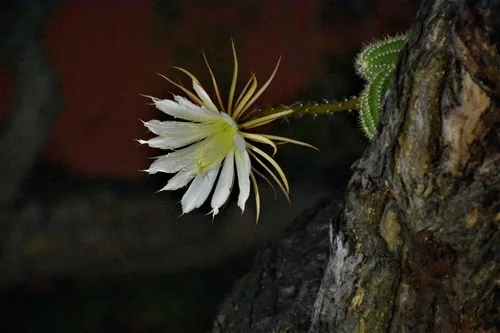
- Pollinator: Large white flowers open after dark for hawkmoths and nectar-feeding bats where they occur -- hand-pollinate in still greenhouses if night visitors are absent.
Companion Planting