About
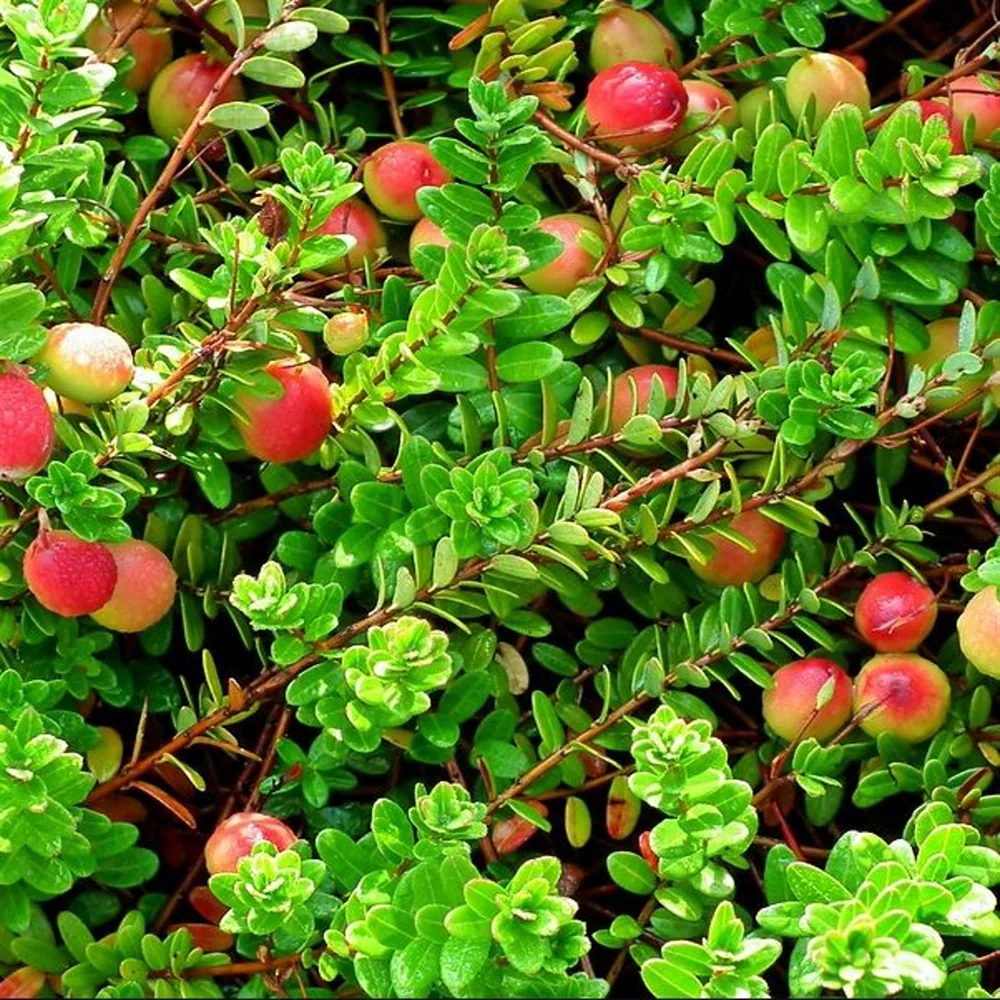
Cranberry (Vaccinium macrocarpon) is a low-growing, evergreen shrub native to North America, particularly thriving in wetlands and bogs. It features slender, wiry stems that form dense mats, with small, leathery leaves that are dark green in summer and turn bronze in winter. The plant produces pink to red flowers in late spring, which develop into bright red berries known for their tart flavor. Cranberries prefer full sun but can tolerate partial shade. They require acidic, well-drained, consistently moist soils, often found in bog-like conditions. Regular watering is essential to maintain soil moisture. Propagation is commonly achieved through cuttings or layering. Softwood cuttings taken in late spring or early summer root well. Alternatively, existing stems can be pinned to the ground to encourage rooting at nodes. Berries are typically harvested in the fall, from September to November, when they turn a deep red color and have a firm texture. In commercial operations, fields are often flooded to facilitate easier collection of the floating berries.
Permaculture Functions
- Edible: Vaccinium macrocarpon berries become sauce, dried sweetened craisins, and juice concentrate -- once acid and sugar balance the natural tannin.
- Medicinal: A-type proanthocyanidins in juice are the compounds studied for interfering with bacterial adhesion in human urinary tracts -- sweetened cocktail juice is not medicine.
- Ground Cover: Wiry stems layer into evergreen mats that hold peat-sand bogs together and keep fruit clean above the water table -- in home beds.
- Wildlife Attractor: Sandhill cranes, bears, and many songbirds target wild bogs for berries -- leave perimeter fruit if your harvest ethic includes rent.
Companion Planting
- Brassica
- Nightshade