About
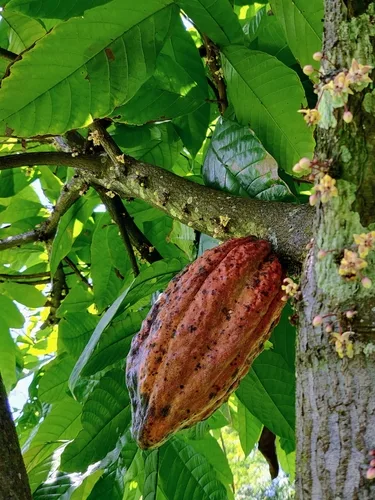
Cocoa (Theobroma cacao) is a tropical rainforest tree of Central and South American origin, usually kept 4 to 8 meters (13 to 26 feet) tall on farms by pruning for pod access. Large alternate leaves shade the trunk, and tiny flowers emerge directly from older wood (cauliflory), developing into colorful pods filled with mucilage-coated seeds. It grows best under partial shade in hot, humid climates with even rainfall distribution. In permaculture systems it fills the sub-canopy beneath taller fruit and timber trees, often interplanted with bananas for light shade and wind protection. Site in dappled shade with protection from desiccating winds. Deep, fertile, well-drained soils rich in organic matter support heavy pod set; drought during pod fill reduces yield sharply. Propagate from fresh seeds soon after harvest, or graft selected clones for disease resistance. Keep nursery plants humid and shaded until roots reach field capacity. Harvest pods when color breaks and husk notes change; extract seeds with pulp for fermentation and drying. Expect seasonal flushes rather than year-round even production on seedlings.
Permaculture Functions
- Edible: Fermented, dried seeds become cocoa mass and butter -- the primary input for chocolate after roasting and grinding on farm or cooperative scale.
- Medicinal: Traditional use includes cardiovascular and mood support from flavanol-rich products -- modern portions are confection-sized, not medicinal doses without guidance.
- Shade Provider: Compact crown filters light for understory vanilla, ginger, and annuals -- creates humid microclimate that reduces vapor pressure deficit at leaf level.
- Wildlife Attractor: Sweet pulp feeds monkeys and rodents if pods crack early -- design harvest timing and fencing to balance wildlife pressure.
- Mulcher: Large leaves drop continuously in humid climates -- feeds soil fungi when chop-and-drop is left on contour or used as path mulch beneath pods.
Companion Planting