About
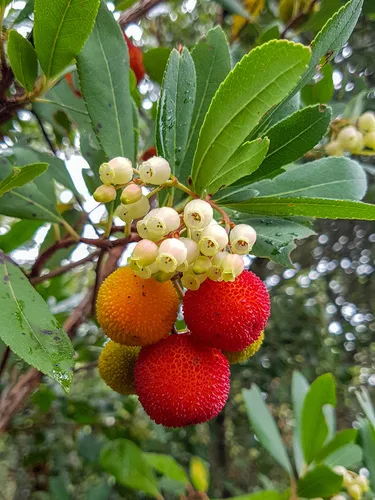
Arbutus (Arbutus unedo), often called the strawberry tree, is an evergreen small tree native to the Mediterranean region and nearby western parts of Eurasia. It typically forms a rounded crown and reaches roughly 5–10 m (16–33 ft) tall, with leathery, dark leaves and clusters of urn-shaped flowers. Later you can find the same plant carrying strawberry-like fruits, which makes it a permaculture win: one sturdy woody “column” provides food for wildlife, long-lasting structure, and year-round cover while it works the soil with deep, persistent roots. Full sun to partial shade; flowering improves in brighter sites. Moderate watering while establishing, then reduce inputs as it proves itself. Prefers acidic, well-drained soil; it dislikes soggy, heavy wet beds. Tolerates brief cool weather, but prolonged freezes below about 32°F (0°C) can reduce flowering. Seeds: collect ripe fruit, clean seeds, then cold-stratify for 8–12 weeks; germination can take 1–3 months. Semi-hardwood cuttings: take in summer, root in a humid, airy medium, and plan on 6–10 weeks to establish. Layering: bend a low branch and keep it touching moist soil for several months to form roots. Pick fruits when fully ripe (deep red), typically late fall into winter depending on climate. Eat fresh or turn into jam and fruit paste; because fruits ripen unevenly, harvest in rounds. Flowers also matter: if you harvest fruit, leave some clusters for pollinators and browsing birds.
Permaculture Functions
- Edible: Arbutus unedo strawberry-tree fruits ripen unevenly from yellow to deep red with gritty sweetness suited to jams and fruit leathers -- harvest in rounds because stems carry both flowers and fruit at once on mature plants.
- Wildlife Attractor: Urn-shaped white flowers drip nectar for bees in autumn while red drupes feed thrushes through winter -- leave some clusters if you want honest bird traffic beyond patio décor.
- Ornamental: Leathery evergreen leaves and cinnamon exfoliating bark give year-round structure in Mediterranean-climate guilds -- chlorosis on limestone soils is the usual failure, not pests.
- Border Plant: Compact rounded crowns edge paths and privacy screens without casting deep shade like oaks -- pair with other ericaceous plants that share acidic, well-drained honesty.
Companion Planting