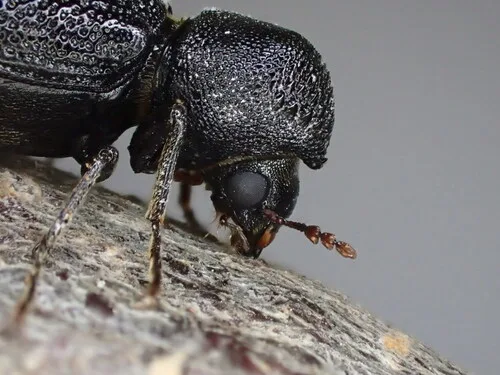
Field Identification
Twig borers are larvae of small moths or beetles that tunnel inside shoots, causing flagged dead tips, sawdust at entry holes, and weakened scaffold on fruit trees and ornamentals. Damage is often localized to current-year wood. Hosts range from stone fruit to pecan to roses depending on species complex in your region across temperate to subtropical production zones.
Split flagged twigs lengthwise to find tunnels, frass, and larvae or pupae. Note hole size and position relative to buds -- some shothole borers differ in gallery pattern. Use regional extension fact sheets to separate lesser peachtree borer look-alikes from true twig-boring guild members on your crop.
Not sure what you have? Use the symptom diagnosis tool →
How to Deal With It
Organic Control Methods
Parasitic wasps attack eggs and larvae of many twig-boring lepidopterans. Woodpeckers and nuthatches probe shallow tunnels on orchard edges. Preserve flowering understory for parasitoid adults. Avoid orchard-wide sprays during bloom that remove these allies.
Remove and destroy prunings before adults emerge. Paint large pruning cuts only when your crop guide recommends it, because improper paint traps moisture. Avoid leaving long stubs that attract egg laying. Choose resistant rootstocks where breeding programs document benefit.
Prune during safe windows for your species to avoid attracting egg layers to fresh wounds. Sanitize tools between trees when bacterial diseases also occur in your area. Train young trees to fewer dominant leaders to reduce twig crowding that hides early infestations.
Clip and burn or chip flagged tips when regulations allow, removing larvae before they descend to larger wood. Band trunks with mating disruption or sticky monitoring tools only where species-specific programs exist -- not generic fixes.
Bt sprays target young caterpillar twig borers on susceptible hosts when timing matches egg hatch -- follow regional degree-day models. Kaolin films on trunks deter some egg layers on labeled crops. Horticultural oil dormant applications help on some lepidopteran complexes but not all twig borers -- confirm with extension. Spinosad is an option on labeled crops with bee precautions.
Let Nature Handle It
Natural Enemies
- Parasitic Wasps
- Woodpeckers
- Predatory Beetles
Threat Map