About
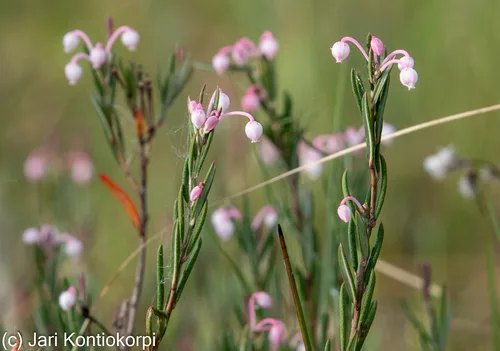
Bog rosemary (Andromeda polifolia) is a small, slow-growing evergreen shrub of cold peatlands and acidic bogs, with narrow, rolled leaves that are white beneath and nodding pink-tinged white flowers in late spring. Plants spread by layered branches and rarely exceed 1 meter (3 feet) tall, forming knee-high thickets over sphagnum. It is not related to culinary rosemary despite the name. It suits naturalized rain gardens, bog gardens, and shoreline buffers in cool temperate climates where soil stays moist but aerated and pH remains acidic. Provide full sun in true bog settings or partial shade at the southern end of its range. Constant moisture from rain or irrigation with low dissolved salts is essential; never let roots dry while establishing. Propagate from semi-hardwood cuttings under mist in summer, or carefully divide layered offsets. Seed is tiny and slow; specialist nurseries are more reliable for home gardeners. Minimal pruning is needed; remove dead wood after flowering. Do not harvest for consumption; foliage contains andromedotoxins.
Permaculture Functions
- Ornamental: Fine-textured evergreen foliage and bell-like flowers suit curated bog displays -- reads as refined where sphagnum and stone mulch frame the root zone.
- Wildlife Attractor: Bumblebees visit pendant flowers; dense cover shelters small birds near water -- place blocks away from livestock browse.
- Erosion Control: Shallow fibrous roots mesh with peat and moss to stabilize saturated banks -- slows wave action on pond margins better than bare mud.
- Ground Cover: Spreading mats exclude weeds in acidic wet beds where turf fails -- pairs with other ericads that share pH needs.
- Pollinator: Early-season nectar supports emerging bees when few other shrubs bloom in cold bogs -- timing bridges woodland ephemerals and midsummer forbs.
Companion Planting