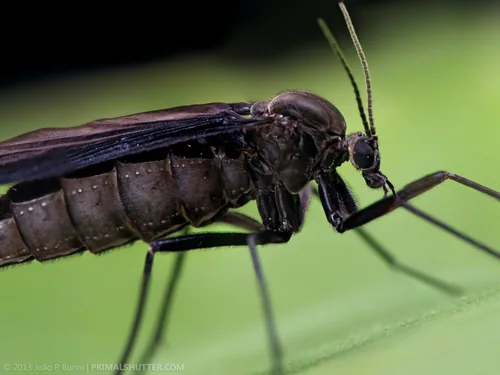
Field Identification
If leaves, stems, or fruit suddenly look spotted, sunken, or rotting, fungus gnats may already be active. This problem often starts small, then spreads across healthy tissue before most growers realize how serious it is. Warmth, moisture, and crowded foliage usually speed it up. Treat early, because waiting even a few days can turn a manageable infection into major crop loss.
Look for a pattern, not one bad leaf: expanding spots, dark or pale halos, fuzzy growth, or tissue that collapses when touched. Check both leaf surfaces, stem bases, and fruit scars where symptoms first appear. New lesions after rain, overhead watering, or heavy dew are a strong clue. When separate spots begin merging into larger dead patches, the disease is advancing quickly.
Not sure what you have? Use the symptom diagnosis tool →
How to Deal With It
Organic Control Methods
Bacillus thuringiensis israelensis (Bti) is the most effective biological control for fungus gnat larvae — it is a naturally occurring bacteria that kills larvae when they ingest it but is harmless to everything else. Apply as a soil drench every 5-7 days for 3 weeks to catch multiple larval generations. Steinernema feltiae nematodes hunt fungus gnat larvae in soil and are available commercially — apply to moist soil when temperature is above 50F (10C), keep soil moist for 2 weeks after application. Hypoaspis miles predatory mites live in the top layer of soil and eat eggs and young larvae — add to potting mix when potting or top-dress established plants.
Fungus gnats only breed in moist organic matter — let the top 2 inches of soil dry completely between waterings and the problem largely solves itself. This is the single most effective prevention. Overwatering is the cause of 90% of fungus gnat problems. Larvae live in the top 2-3 inches of soil feeding on organic matter and roots — they cannot survive in dry soil. Use well-draining potting mix with perlite to improve drainage. Never use unfinished compost or fresh wood chips in seed starting mix — they are ideal fungus gnat habitat. Yellow sticky cards at soil level monitor adult populations — more than 5 per card per week means larvae are actively breeding.
Bottom-watering (filling a saucer and letting soil absorb from below) keeps the surface dry while adequately watering plants — this alone prevents most fungus gnat infestations in indoor settings. Remove standing water from saucers within 30 minutes of watering.f-inch layer of coarse sand or fine gravel — adults cannot lay eggs through it. Remove algae and decomposing plant material from soil surfaces and greenhouse benches where adults congregate. Fungus gnat adults live only 7-10 days — interrupting the breeding cycle for 3 weeks eliminates the infestation.
Yellow sticky cards placed at soil level trap adult fungus gnats and are your best monitoring tool — when catches drop to near zero, the infestation is broken. Place one card per pot or per 4 square feet of bench space. A layer of fine sand or horticultural grit on soil surface prevents egg-laying physically — most effective preventive measure for established plants. For seedling trays, covering with plastic wrap between waterings keeps surfaces dry and excludes adults. Potato chunk traps work surprisingly well: press a raw potato slice into soil surface, check after 4 hours, larvae attracted to it can be removed and discarded.
Hydrogen peroxide soil drench kills larvae on contact — mix 1 part 3% hydrogen peroxide with 4 parts water and water plants normally. It fizzes on contact with organic matter in soil, killing larvae, then breaks down into water and oxygen with no residue. Effective and safe. Test on one plant first as some are sensitive. Apply when soil is slightly dry so the drench penetrates rather than pooling. Insecticidal soap as soil drench suppresses larvae. Neem oil drench disrupts larval development — mix 2 tablespoons per gallon and apply every 7 days for 3 weeks. For adults, any contact spray kills them but does nothing about larvae still breeding in soil — always treat soil, not just flying adults.
Let Nature Handle It
Natural Enemies
- Predatory Mites
- Rove Beetles
- Nematodes
Threat Map