About
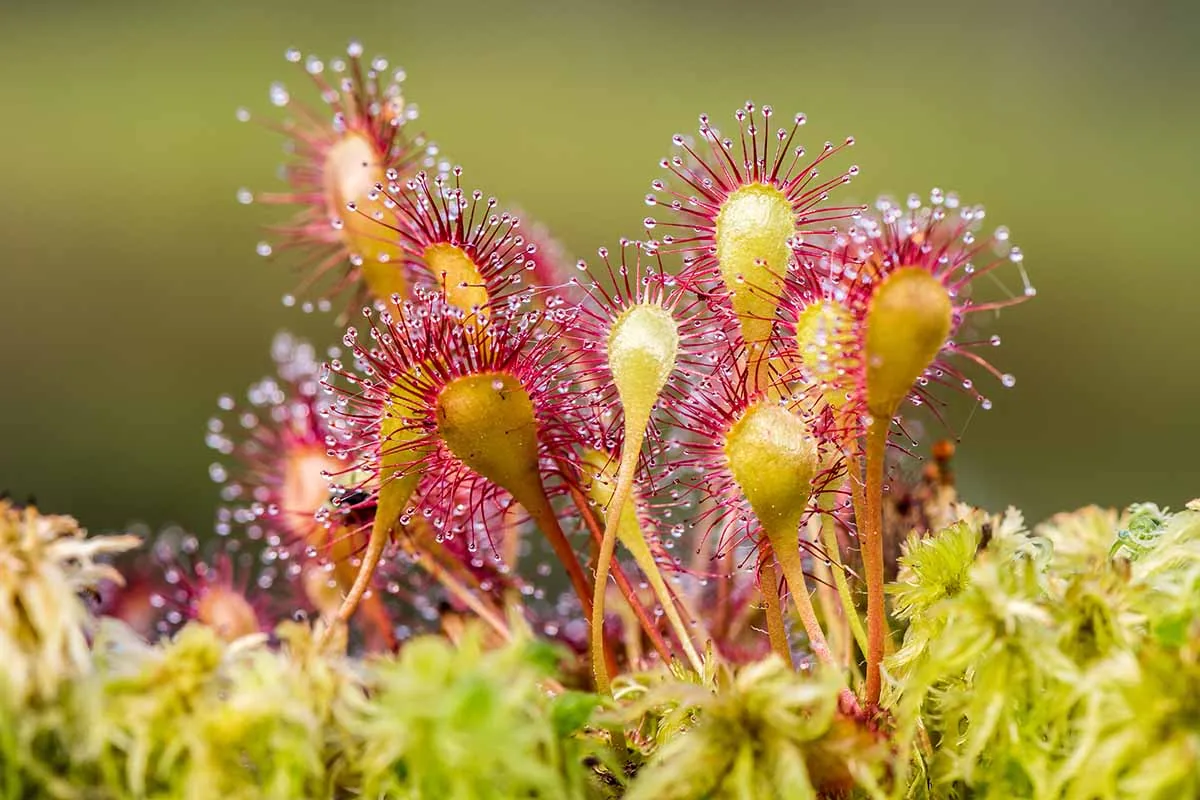
Sundews are carnivorous plants characterized by glandular trichomes (tentacles) on their leaves that secrete sticky mucilage to trap insects. They are commonly found in bogs and fens with acidic, sandy soils. The leaves form rosettes and can vary in size and shape depending on the species. Sundews produce small flowers, typically pink or white, on tall scapes. They require full sun exposure and consistently moist, nutrient-poor soil to thrive. Seed: Sow seeds on the surface of a moist sphagnum peat and perlite mix; do not cover, as they require light to germinate. Maintain high humidity and temperatures between 70-80°F (21-27°C). Germination may take several weeks. Leaf Cuttings: Place healthy leaves on moist sphagnum moss; new plantlets may form at the leaf margins. Sun: Full sun exposure is ideal; however, some species can tolerate partial shade. Water: Keep soil consistently moist using distilled or rainwater; avoid tap water due to mineral sensitivity. Outdoor plants do well when planted near a water feature or in soggy soil. Sundews are primarily cultivated for ornamental purposes and natural pest control rather than harvest.
Permaculture Functions
- Pest Management: Drosera spp. sticky glandular leaves trap fungus gnats and midges spalling from wet media -- not whole-house fly control but honest bench-top biocontrol in bog trays.
- Wildlife Attractor: Trapped arthropods feed nitrogen back into living sphagnum mats -- while spiders pick surplus prey along the pot rim.
- Ground Cover: Rosettes tile carnivorous planter edges where peat stays soggy -- yet minerals stay dilute enough triggers stay hungry.
Companion Planting
Also mentioned as companions:
- Sphagnum Moss
- Bog Rosemary
Not yet profiled in PermiePortal
- Plants requiring high nutrient soils
Threats & Pressure