About
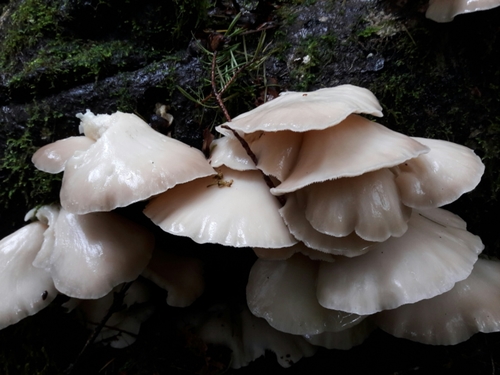
Oysters are the beginner's handshake with log culture — they grow on many hardwoods, colonize fast, and forgive a little clumsy technique. In subtropical and tropical Americas pick fresh-cut, living hardwood (oak, sweetgum, poplar types) and keep stacks off the ground on pallets or rails. Wet season humidity helps; dry season needs soaking pulses. They also run on straw and coffee grounds in buckets if you want urban mycopunk. Still: identify the flush; look-alikes exist in the wild. ☀️💧 Sun and Water: - Shade to bright shade; avoid all-day sun on thin logs. - Soak or sprinkle logs to trigger fruiting; let them drain fully. - Bark intact slows drying; vertical or lean-to stacks balance moisture and air. ✂️ ✂️ Propagation: - Plug, sawdust, or totem inoculation into green wood. - After harvest, rest logs; rotate soaking to time flushes with weather.
Permaculture Functions
- Edible: Reliable outdoor crop on suitable hardwoods.
- Medicinal: Popular in supplement hype; separate tradition from marketing.
- Mulcher: Spent logs become hugel and pathway fill.
- Soil Improvement: Mycelium exits the log into surrounding organic matter.
Oyster mushroom hosts turn thinnings into meals:
Practitioner Notes
- Blanch or process within hours if you are freezing—enzymes keep chewing while paperwork waits.
- Weigh small test batches before scaling tinctures—solvent ratio mistakes are expensive at gallon ambition.
- Soil smell and root color tell more than gadget overload—dig a small hole twice a season.
- Overfertilized fast growth dilutes flavor and invites sap feeders—lean soil often tastes more like itself.
Companion Planting
- Oak
- Elm
- Alder