About
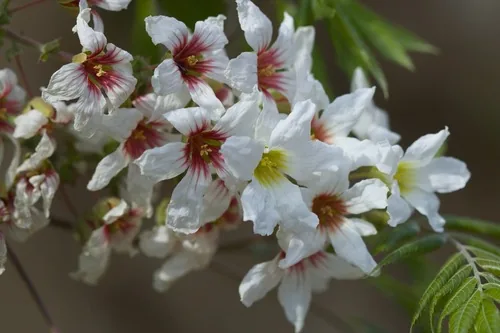
Yellowhorn (Xanthoceras sorbifolium) is a deciduous Chinese tree reaching 5–8 m (16–26 ft), valued for showy panicles of white flowers with yellow eyes and edible seeds inside leathery capsules once roasted or processed. Compound leaves resemble mountain ash, giving a tidy orchard aesthetic. It requires winter chill to flower reliably—low-chill subtropical and tropical Americas lowlands are poor matches except in upland microclimates or as a curiosity that may grow leafy but shy to bloom. Full sun for flowering and fruit set. Deep, fertile, well-drained soil; tolerates alkaline conditions better than many nut crops. Regular moisture during establishment; somewhat drought-tolerant when older but not a desert specialist. Stratify seeds 8–12 weeks cold-moist; sow in deep pots to accommodate taproot. Graft improved selections onto seedling understocks for predictable nut quality. Take summer budding or whip grafts in active growth with clean cambium contact. Collect capsules when they begin to split; dry and extract seeds before storage pests arrive. Roast or process seeds before eating—raw quality varies and preparation traditions matter. Prune for central leader structure while young to prevent weak angles.
Permaculture Functions
- Edible: Xanthoceras sorbifolium leathery pods hold kernels like small chestnuts -- roast or grind; raw quality is meh and astringent.
- Ornamental: White panicles with yellow throats cover bare branches in late spring -- compound ash-like leaves stay tidy all summer.
- Wildlife Attractor: Insect crowds mob inflorescences in chill-hour climates -- birds crack capsules when seeds mature.
- Windbreaker: Rounded 8 m crown softens north-wind across orchard rows -- needs cold winters to flower; low-chill sites get leaves without nuts.
Companion Planting
Threats & Pressure