About
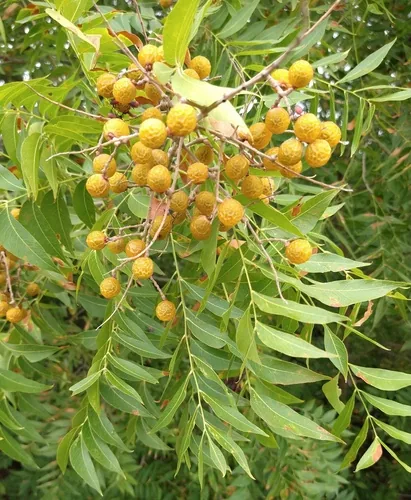
Western soapberry (Sapindus drummondii) is a deciduous tree or large shrub of south-central North American woodlands and limestone hills, bearing compound leaves and translucent yellow berries rich in saponins. Plants reach 20–40 feet (6–12 m), often multi-stemmed. Berries support traditional soap demonstrations—not casual snacks—while birds handle the chemistry fine. Full sun to partial shade. Well-drained soils, including rocky limestone, suit it; tolerates drought once established. Occasional deep watering speeds establishment. Sow scarified seed after soaking. Transplant young seedlings with root integrity. Berries for soap demos follow vetted methods—avoid ingestion experiments. Wildlife peak follows warm-season ripening.
Permaculture Functions
- Wildlife Attractor: Translucent yellow Sapindus drummondii drupes feed robins and mockingbirds that shrug at saponins -- humans stick to soap demos, not handful snacks.
- Erosion Control: Deep roots grip limestone talus and terrace riprap -- classic Edwards Plateau stream-side tree where shallow annuals wash away.
- Border Plant: Multi-stem habit forms airy screens along dry fence lines -- thorns absent compared with eastern soapberry cousins.
- Ornamental: Ferny compound leaves bronze in fall before drop -- less showy than maples, perfect for Hill Country natives palettes.
Companion Planting
- Saponin toxicity—do not improvise human consumption
- Name overlap with wingleaf soapberry entries—Sapindus drummondii is this record’s anchor
Threats & Pressure