About
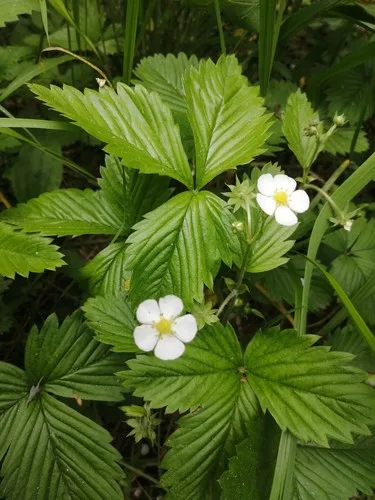
Wild strawberry (Fragaria virginiana) is a native North American runnering perennial with trifoliate leaves, white five-petaled flowers, and small, aromatic red berries. Plants form loose mats 5 to 15 cm (2 to 6 inches) tall, spreading by stolons into sunnier woodland edges, meadows, and disturbed openings. Berries are intensely flavored though smaller than commercial cultivars. It suits edible ground layers in forest gardens, living mulch between young shrubs, and erosion-prone banks where turf is undesirable. Full sun to partial shade with moist, well-drained, fertile soil yields best fruit; drought reduces berry size but plants often survive as foliage. Transplant runners with rooted plantlets in cool, moist weather, or sow seed after stratification. Divide crowns every few years to rejuvenate. Pick berries when fully red and aromatic; harvest frequently because they soften quickly. Leave some fruit for wildlife if foraging guild design allows.
Permaculture Functions
- Edible: Small berries deliver concentrated aroma for fresh eating and preserves -- labor per pint is high compared to commercial strawberries but flavor rewards patience.
- Ground Cover: Runners knit soil under fruiting shrubs -- living mulch that tolerates foot traffic lightly once established.
- Pollinator: Open flowers feed small bees and syrphid flies in late spring -- overlaps with other rosaceous bloom for pollinator continuity.
- Wildlife Attractor: Berries feed birds and mammals; mats shelter insects -- balance harvest expectations with habitat goals on each site.
- Erosion Control: Fibrous roots and stolons stabilize ditch banks and orchard berms -- reduces surface wash after intense rain.
Threats & Pressure