About
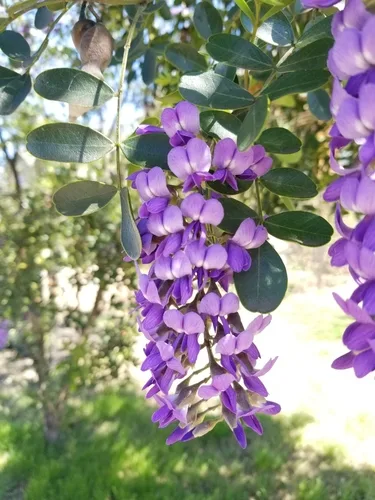
Texas mountain laurel (Dermatophyllum secundiflorum, formerly Sophora secundiflora) is a slow-growing evergreen of southwestern North American scrub and hillsides, with glossy compound leaves and drooping clusters of purple, grape-soda scented flowers in early warm season. Plants form rounded crowns to roughly 6 to 9 meters (20 to 30 feet) with picturesque branching. Seeds are large and toxic if eaten. It suits xeric foundation plantings, deer-resistant screens in warm climates, and pollinator gardens where fragrance matters more than rapid growth. Full sun and sharply drained, alkaline-tolerant soils match ecology; drought tolerance is high once established. Young plants need deep, infrequent irrigation until roots expand. Start from scarified seed or container nursery stock selected for form. Protect from prolonged hard freezes while young. Do not consume seeds; keep fallen pods away from curious pets and children. Prune for clearance beneath power lines only with training plans because recovery is slow.
Permaculture Functions
- Ornamental: Purple flower clusters and glossy foliage anchor southwestern landscapes -- specimen quality improves with decades of patience.
- Wildlife Attractor: Flowers feed bees during a concentrated bloom window -- timing provides predictable forage in arid climates.
- Border Plant: Dense evergreen screen reduces sight lines without lawn -- pair with succulents for layered texture.
- Windbreaker: Stiff wood and compact crowns reduce wind speeds on exposed lots -- place with setback from structures for ice-load safety in marginal freeze events.
- Nitrogen Fixer: Legume family roots associate with rhizobia in many sites -- contributes modest nitrogen inputs compared to herbaceous legumes but supports soil biology.
Companion Planting
Threats & Pressure