About
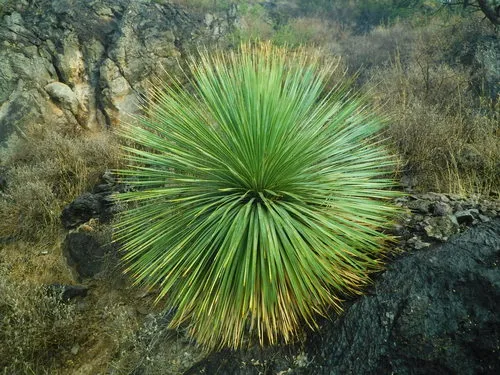
Desert spoon (Dasylirion wheeleri) is a dramatic rosette plant of Chihuahuan Desert hillsides, forming a dense sphere of narrow, serrated leaves atop a short, rough trunk in very old specimens. Tall, plume-like flower spikes rise in summer, feeding pollinators and producing light seeds on the wind. Rosettes commonly span 1 to 1.5 meters (3 to 5 feet) and live for decades on rainfall alone once established. It suits xeriscape berms, rock gardens, and erosion-control plantings across arid warm-temperate to subtropical zones with sharp drainage. Plant in full sun on slopes or raised beds; tolerate extremes of heat but not prolonged wet crowns in winter cold. Gravel mulch keeps collars dry. Sow seed in warm weather on sandy mix, or purchase field-grown specimens with intact root balls. Transplant during mild temperatures and withhold water until roots re-anchor. Harvest leaves only for craft fiber on private land with legal permission; traditional sotol beverages use other Dasylirion species and require specialized fermentation knowledge.
Permaculture Functions
- Ornamental: Architectural rosettes and tall inflorescences anchor desert-style plantings -- reads as sculpture when paired with fine gravel and boulders.
- Erosion Control: Fibrous roots and wide basal rosettes catch debris on rocky slopes -- slows sheet flow after monsoon bursts.
- Wildlife Attractor: Tall flower spikes feed native bees and hummingbirds during bloom -- seeds feed birds if spikes remain into winter.
- Fiber: Leaf margins yield tough fiber for cordage in traditional crafts -- not a primary crop plant but culturally significant where sotol is harvested sustainably.
- Border Plant: Spiny leaf margins deter casual foot traffic -- defines edges along paths and wildlife exclusion zones.
Companion Planting
Threats & Pressure