About
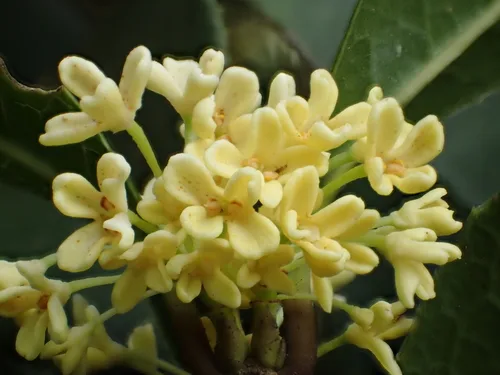
Tea olive (Osmanthus fragrans) is an evergreen shrub to small tree with leathery leaves and tiny white flowers that punch far above their size in fragrance—sweet apricot perfume can carry downwind on calm evenings. It blooms in repeating flushes across long seasons in warm climates, making it a sensory anchor near patios, paths, and bedroom windows. Traditional use scents tea and sweets; modern landscapes use it where ‘low maintenance’ still means something should smell alive. Full sun to partial shade; hotter inland sites appreciate afternoon shade. Moist, well-drained, acidic soils suit it best; chlorosis appears on alkaline ground without amendments. Consistent moisture while establishing; older plants endure short drought but look richer with occasional deep watering. Semi-hardwood cuttings root with bottom heat and humidity in late summer. Air-layering suits upgrading a branch into a new plant on old specimens. Seeds are slow; clones preserve known fragrance forms. Pick flowers at peak open for infusions and syrups; process quickly—volatile aromatics fade fast. Dry flowers gently for tea blends; avoid sealed plastic while damp. Leave plenty of bloom for nighttime pollinators if your harvest is aesthetic, not survival.
Permaculture Functions
- Medicinal: Osmanthus fragrans tiny blossoms steep into apricot-scented tisanes across East Asian pharmacy shelves -- confirm species because tea olives get confused with toxic lookalikes in hurry-up harvests.
- Pollinator: Night-opening clusters pump nectar for moths -- fills the gap when daytime bees already finished citrus bloom weeks earlier.
- Wildlife Attractor: Sparrows nest inside sheared hedges -- while perfume alerts humans that hedgerows still breathe during winter dormancy.
- Ornamental: Glossy opposite leaves plus intermittent creamy clusters give designers evergreen bones -- without azalea fuss.
- Border Plant: Tight clipping tolerates pathway scent walls outside cafés -- where flower size never beat fragrance reach.
Threats & Pressure