About
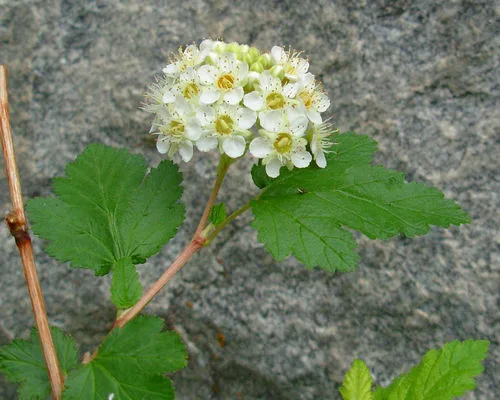
Ninebark (Physocarpus opulifolius) is a cold-hardy North American shrub with exfoliating bark, lobed leaves, and foamy clusters of white to pink flowers in late spring, followed by persistent red seed heads. Arching stems typically form 6 to 10 feet tall and wide thickets in sun or light shade along streams and woodland edges. Cultivars with copper or purple foliage are widely used in designed landscapes. It suits rain garden shoulders, riparian buffers, and privacy screens in temperate climates with cold winters. Full sun intensifies foliage color on purple-leafed selections; moist, well-drained soils support rapid growth, though established plants tolerate drought. Propagate from softwood cuttings in early summer, or transplant suckers during dormancy. Seed is viable but variable. Renew old wood by removing a third of the oldest stems at the base in late winter to encourage juvenile bark and vigorous bloom.
Permaculture Functions
- Ornamental: Peeling bark and seasonal flower color provide interest across seasons -- works as a structural backbone in mixed shrub borders.
- Wildlife Attractor: Flowers feed pollinators; dense branching shelters songbirds -- seed heads persist into winter for visual interest and forage.
- Erosion Control: Fibrous roots stabilize moist banks -- useful on pond edges where periodic flooding occurs but not year-round submersion.
- Mulcher: Leaf drop feeds soil biology under shrub -- combine with mulch-tolerant perennials at the drip line.
- Border Plant: Arching habit screens utilities without a wall of monoculture -- stagger with evergreens for winter structure.
Companion Planting