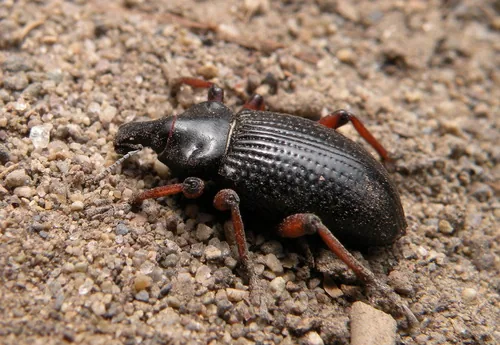
Field Identification
If plants are wilting, notching at the edges, or fruit and roots show hidden feeding damage, ulluco weevil may be the cause. Adults chew above ground while larvae often feed out of sight inside soil, stems, or fruit. Damage builds quietly, then plants crash fast when roots are heavily hit. Act early so a small weevil problem does not become a season-long infestation.
Look for small beetles with a hard body and a distinct snout, usually active at dawn, dusk, or night. Check for crescent-shaped leaf notches, punctures in fruit, or tiny entry holes near stems. In soil or damaged tissue, larvae are often pale, legless, and curved in a C-shape. Fresh chew marks plus snout beetles or C-shaped grubs confirm active weevil pressure.
Not sure what you have? Use the symptom diagnosis tool →
How to Deal With It
Organic Control Methods
Entomopathogenic nematodes in moist beds after harvest incorporation attack pupae in soil when soil temperature fits the product. Ground beetles and spiders hunt adults walking mulch. Mulch-rich systems support general predators if you avoid nightly pyrethrin -- balance moisture so nematodes survive, not so much that tubers rot.
Inspect imported Andean germplasm under quarantine; isolate new lines one season before field release. Shake adults onto white sheets over foliage at dusk -- weevils drop when startled. Map fields with history and walk those first each year. Clean seed tubers beat mystery imports.
Rotate ulluco with non-host crops so overwintering adults meet bare soil. Use only clean propagation material; cull infested tubers before storage. Harvest carefully to avoid wounds that invite egg-lay. Sterilize tools between plots so you do not drag grubs on mud.
Floating row covers on new plantings block adults until vines outgrow hoops -- bury edges. Pitfall traps along bed edges catch walking weevils for monitoring. Solarize small nursery beds in sunny sites if you can tarp for weeks before planting.
Neem and Beauveria bassiana target adults during evening activity when contact sprays hit walking beetles. Soil drenches with approved microbial products may reach larvae near crowns when labels and certifiers allow -- read restrictions. Repeat after rain; fungi need moisture to infect. Combine with rotation; sprays rarely fix fields full of pupae.
Let Nature Handle It
Natural Enemies
- Ground Beetles (Carabidae)
- Entomopathogenic Nematodes
- Entomopathogenic Fungi