About
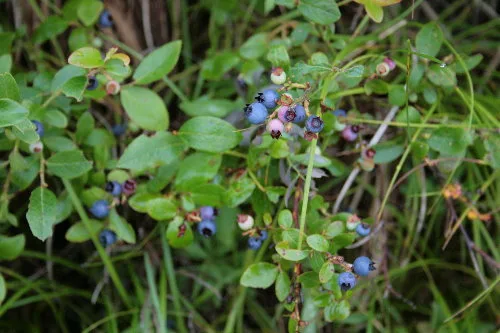
Lowbush blueberry (Vaccinium angustifolium) is a rhizomatous, cold-hardy shrub of northeastern North American barrens and acidic soils, forming knee-high carpets that turn fiery red in autumn. Small sweet berries ripen in summer on twiggy stems, and colonies expand slowly across sand plains and managed fields. Commercial harvests often come from semi-wild stands that are pruned on multi-year cycles. It suits permaculture ground layers beneath open pine canopies, edible forest edges, and rain-garden berms where pH stays acidic and organic mulch mimics natural leaf litter. Full sun maximizes fruit; plants tolerate partial shade but yield less. Constant moisture without waterlogging, plus pH roughly 4.5 to 5.5, supports healthy roots; avoid nitrate-heavy fertilizers that damage ericoid mycorrhizae. Layer rhizome pieces in early spring, or transplant plugs from licensed nurseries. Softwood cuttings under mist work in early summer for named selections. Hand rake or pick berries when fully blue and detach easily; on large patches, use specialty rakes on multi-year rotations to avoid plant damage.
Permaculture Functions
- Edible: Small berries concentrate flavor and anthocyanins -- excellent for quick freezing and baking where labor for hand harvest is acceptable.
- Wildlife Attractor: Fruit feeds birds and mammals; dense mats shelter ground-nesting species -- leave buffer strips if commercial picking overlaps wildlife needs.
- Erosion Control: Rhizomes stabilize sandy, acidic banks -- useful on coastal bluffs where salt spray stays moderate.
- Ground Cover: Low stature allows underplanting in pine-oak systems -- weed suppression improves once mats close canopy at soil level.
- Pollinator: Bell-shaped flowers feed native bees during cool late spring -- timing bridges early woodland ephemerals and summer forbs.
Companion Planting
- Acidic organic mulch systems