About
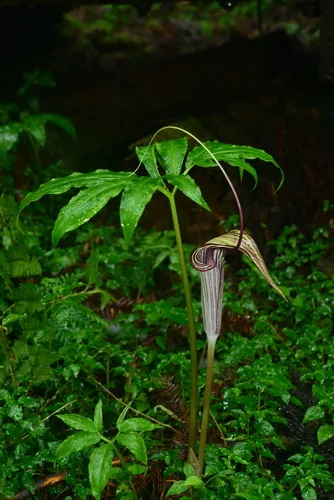
Jack-in-the-pulpit (Arisaema triphyllum) is a spring-emerging woodland perennial with one or two compound leaves and a distinctive spathe-and-spadix inflorescence striped green, purple, or brown. Plants arise from a corm and typically reach 30 to 75 cm (1 to 2.5 feet) in rich deciduous forest soils. Bright red berries ripen in late summer on female plants when pollinators have been present. It belongs in shade gardens, rain garden buffers, and restored forest understories across eastern North America where canopy shade and leaf litter mimic natural conditions. Site in partial to full shade with moist, humus-rich, well-drained soil. Avoid dry sand or full sun that scorches leaves. Sow fresh seed in autumn outdoors after pulp removal, or divide offsets carefully during dormancy with minimal corm damage. Do not eat raw tissues; calcium oxalate crystals cause painful irritation. Traditional use requires specific processing beyond casual foraging.
Permaculture Functions
- Ornamental: Striking inflorescences and bold foliage lend authenticity to native shade plantings -- pairs with ferns and spring ephemerals for layered timing.
- Wildlife Attractor: Berries feed thrushes and rodents that disperse seed -- leave fruiting stems if foot traffic allows.
- Ground Cover: Colony expansion fills bare soil under shrubs where turf fails -- slow spread is manageable in designed beds.
- Medicinal: Historic Indigenous protocols used processed corms sparingly -- modern foragers should treat all parts as toxic until expert training is documented.
- Erosion Control: Fibrous roots mesh with leaf litter on slopes under trees -- reduces surface wash after storms when canopy slows raindrops.
Companion Planting