About
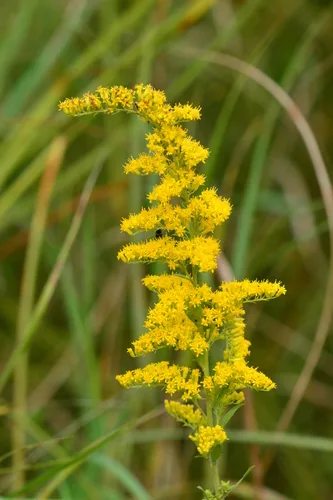
Gray goldenrod (Solidago nemoralis) is a clump-forming goldenrod of dry, sunny old fields and roadsides, with arching stems, narrow leaves covered in fine hairs, and plume-like arrays of small yellow flowers in late summer and fall. Plants typically reach 30 to 60 cm (1 to 2 feet), shorter than many congeners, and spread modestly by seed rather than aggressive rhizomes. It fits meadow restoration mixes, pollinator hedgerows, and dry rain gardens across eastern and central North America, and performs well in lean soils where taller forbs would flop. Full sun keeps stems stiff; dry to medium moisture suits it best. Avoid rich, irrigated beds that favor competitors. Sow seed outdoors in fall or cold-stratify for spring sowing. Small plugs establish quickly when planted in cool, wet weather. Leave seed heads standing for birds; cut stems in late winter for tidy gardens without removing insect overwintering habitat too early.
Permaculture Functions
- Pollinator: Late-season nectar and pollen support bees and migrating butterflies after many flowers finish -- extends forage into autumn temperature swings.
- Wildlife Attractor: Finches and sparrows eat seeds; stems host gall insects that feed insectivorous birds -- leave dead stalks until spring thaw.
- Ground Cover: Dense basal foliage excludes annual weeds in dry banks -- pairs with grasses that match height and moisture.
- Dynamic Accumulator: Deep roots pull minerals from subsoil; autumn leaf drop recycles to surface -- use in chop-and-drop with species that tolerate allelopathy testing.
- Ornamental: Soft gray foliage and airy yellow plumes suit naturalistic designs -- reads refined when massed against dark evergreens.
Companion Planting