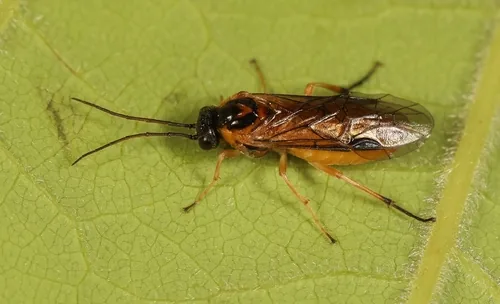
Field Identification
If leaves show trails, fruit turns soft, or roots collapse from inside, gooseberry sawfly may already be feeding. The larval stage does most of the damage, often hidden where you cannot see it at first glance. By the time yellowing or rot appears, feeding may be well underway. Move quickly when symptoms begin to prevent another wave of eggs and larvae.
Watch for tiny eggs near plant tissue, pale legless larvae inside mines or fruit, and sudden soft spots or tunnels. Adults are usually small flies that hover or dart when disturbed. Check around wounds, blossoms, and moist plant debris where egg-laying is common. Cut open suspect tissue: live maggots or fresh tunnels are the clearest field confirmation.
Not sure what you have? Use the symptom diagnosis tool →
How to Deal With It
Organic Control Methods
Ichneumonoid wasps parasitize gooseberry sawfly larvae when sprays stay selective -- you see larvae slow down with parasite eggs on their skin. Ground beetles and birds eat larvae that drop during feeding. Broad pyrethrin across bushes kills parasitoids while sawflies return from hedgerows.
Learn local emergence windows -- sticky cards near bushes catch adults and remind you to flip leaves. Scout undersides weekly during leaf burst; sawflies start there before holes show on top. Flag bushes that sawed last year; females often return to the same yard.
Shear heavily infested canes after harvest if renovation timing allows -- drop prunings in soapy water. Even plant vigor helps bushes outgrow light attacks; drought-stressed canes show holes faster. Avoid excess nitrogen that pushes ultra-soft leaves all at once.
Rub egg ribbons off stems with gloved fingers before larvae hatch -- satisfying and cheap. Blast young clusters with sharp water before they fan across a whole bush. For small plants, pick larvae into a bucket mornings when they cluster on tips.
Insecticidal soap and spinosad directed into leaf axils kill small larvae -- Bacillus thuringiensis is unreliable on sawfly larvae. Neem suppresses early clusters if coverage is thorough on undersides. Spray at dusk to spare bees on flowering understory. Reapply after rain.
Let Nature Handle It
Natural Enemies
- Parasitic Wasps (Ichneumonoidea)
- Ground Beetles
- Birds