About
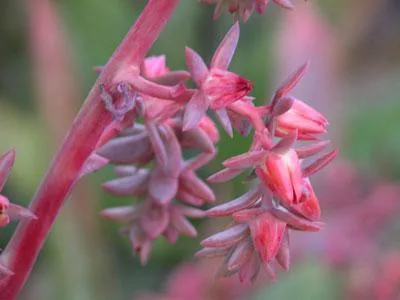
Echeveria species such as Echeveria elegans form tight rosettes of fleshy leaves in cool-winter, dry-summer climates from Mexico into adjacent ranges. Plants stay low, often under 20 cm (8 inches), spreading by offsets into mats suitable for containers and green roofs. Tall stalks of orange to pink flowers attract hummingbirds when moisture returns after dry spells. They are standard elements of frost-free rock gardens, succulent tapestries, and water-wise balcony systems across warm temperate to subtropical zones. Provide bright light with some direct sun; etiolated rosettes indicate insufficient light. Water thoroughly then let soil dry completely; root rot follows continuous moisture, especially in cool weather. Detach offsets once they have short stems and root them in gritty mix. Leaf cuttings callus a few days before contact with moist media. Protect from hard frost; move pots under cover when nights dip near freezing. Reduce watering during short days to keep cells turgid but not bloated.
Permaculture Functions
- Ornamental: Symmetrical rosettes and pastel farina bloom under strong light -- designers use repeated modules for patterned living mulch.
- Ground Cover: Offsets knit between stepping stones where foot traffic is light -- fills gaps that annuals would demand water to hold.
- Border Plant: Low mounds edge paths without blocking sight lines -- pairs with taller agaves for layered texture.
- Pollinator: Tubular flowers on tall scapes feed hummingbirds during warm-season flushes -- timing overlaps with other succulent blooms in collector gardens.
- Wildlife Attractor: Nectar supports small birds and insects; dense rosettes shelter microfauna after rain -- minor role compared to woody habitat plants but nonzero.
Threats & Pressure