About
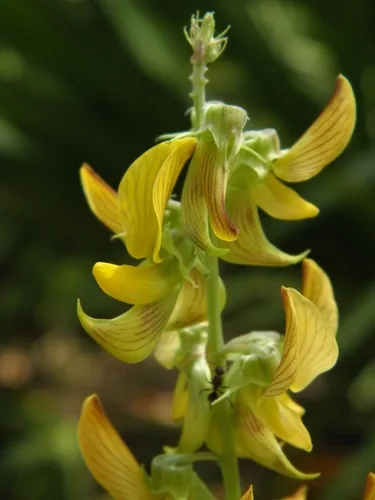
Crotalaria (Crotalaria juncea), often called sunn hemp, is a fast-growing warm-season legume grown for biomass and soil improvement. It commonly reaches 1–2.5 m (3–8 ft) tall and forms upright stems with yellow flowers that can persist for weeks. Native to warm regions (commonly described around Africa/nearby tropical areas) and now used widely as a green-manure crop. In permaculture, it’s a “grow up fast and build soil” plant: nitrogen-fixing roots, heavy leaf production, and quick ground cover that shields soil while you plan the next crop. Full sun; growth slows sharply with shade. Moderate water to start; once established it can tolerate summer drought better than many cover crops. Prefers well-drained soil; waterlogged beds reduce vigor. Handles warm wet seasons but dislikes long cold snaps. Seeds (early warm sowing): direct-sow when soil is warm (often in late spring to early summer); germination commonly occurs in 3–7 days. Seeds (relay sowing): seed into open spaces between rows after the main crop is established, keeping continuous cover without waiting for a new bed cycle. Optional pre-soak: soak seeds 8–12 hours to speed emergence if conditions are marginal. For green manure: cut when plants are tall (often around 6–8 weeks) and before seed pods mature. For mulch: chop and lay residues on the surface to decompose into soil organic matter. For flowers/beneficial insects: leave a portion standing until bloom, then harvest the rest to keep the system on your schedule.
Permaculture Functions
- Nitrogen Fixer: Crotalaria juncea nodulates on warm-season roots -- cut before pods mature if you want green manure without sunn-hemp volunteers everywhere.
- Mulcher: Tall upright stems shed tons of soft leaf in six to eight weeks -- chop-and-drop covers beds during peak heat.
- Erosion Control: Fast canopy shades bare ground through monsoon-style rains -- use between cash rows to hold soil when storms hit.
- Wildlife Attractor: Yellow pea-flowers run for weeks -- feeding bees and parasitoids while you time biomass cuts around bloom.
Companion Planting