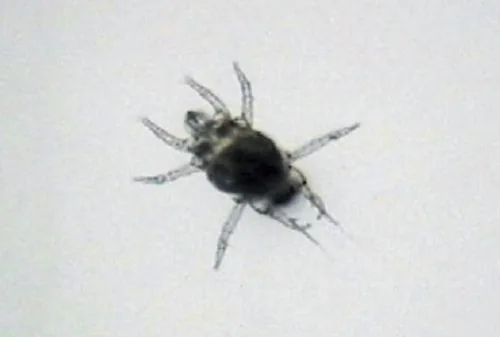
Field Identification
If leaves look dusty, speckled, bronzed, or curled without obvious chewing, cassava green mite is a likely suspect. Mites are tiny but can multiply fast, especially during heat and dry air. Plants lose vigor as feeding drains cell contents from leaves and tender growth. Early action matters, because heavy infestations can spread through a bed in days.
Use a hand lens and check leaf undersides first, especially near veins and new growth. Look for pinprick stippling, fine webbing in some species, and tiny moving dots that range from pale to red or brown. Tap a leaf over white paper; moving specks suggest active mites. Stippled leaves plus mites or eggs clustered under foliage confirms the diagnosis.
Not sure what you have? Use the symptom diagnosis tool →
How to Deal With It
Organic Control Methods
Typhlodromalus aripo and other phytoseiid mites are released or banked in cassava programs abroad -- establishment depends on humidity and freedom from broad sprays. Minute pirate bugs and rove beetles contribute locally where dusty fields still support predators. Buy predators only after you stop killing them weekly with sulfur; otherwise you donate money to insectaries.
Scout the third leaf from the shoot apex weekly; early mites are cheaper to manage than naked stems. Flag blocks that bronzed last year and walk them first. Quarantine imported planting material; mites ride wind and clothing. Track dry seasons when dust lifts mites into every canopy.
Irrigate to raise humidity in nurseries; spider mites hate moist boundary layers. Avoid nitrogen dumps that push endless succulent leaves; each flush is a new mite nursery. Plant windbreaks to cut dust that carries mites and abrades leaves. Keep soil moisture even; drought-stressed cassava flags mites before it flags thirst.
Overhead rinse in early morning on small plots -- cheap humidity bump before predators arrive. A stiff jet on reachable plants knocks mites off; repeat every two to three days during a flare. Combine rinsing with shade cloth in hot tunnels to cut desiccation.
Sulfur and horticultural oil work when temperature labels allow -- hot oil plus hot sun equals burned foliage. Insecticidal soap needs thorough underside coverage; three light passes beat one heroic soak that runs off. Rotate sulfur with soap or neem to slow resistance. Spray at dusk to reduce phototoxicity.
Let Nature Handle It
Natural Enemies
- Typhlodromalus aripo
- Minute Pirate Bugs
Threat Map