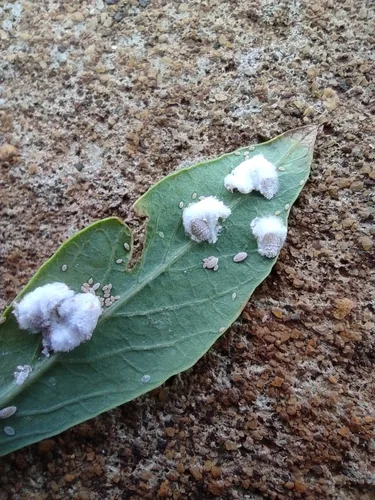
Field Identification
If new growth is curling, yellowing, sticky, or chewed, cassava mealybug may already be on the plant. This pest often builds quietly, then damage appears all at once. Feeding stress weakens growth, reduces yield, and opens the door to secondary disease. Early cleanup is much easier than fighting a full population surge later.
Inspect the newest growth first: leaf undersides, flower buds, stem joints, and tender tips where pests gather. Look for body shape, color, eggs, cast skins, honeydew, webbing, or fresh puncture marks. A hand lens and a white paper tap test help reveal small life stages. Matching visible pests with fresh plant damage confirms active infestation.
Not sure what you have? Use the symptom diagnosis tool →
How to Deal With It
Organic Control Methods
Anagyrus lopezi and other encyrtid wasps parasitize cassava mealybug in classical programs where they are established -- they are not a bottle every farm can order. Lady beetles, lacewings, and syrphid larvae eat exposed crawlers when sprays do not kill them first. Banker plants that host grain aphids can feed predators in greenhouses -- balance that with virus risk. Torching hedgerows kills the wasps and keeps mealybugs.
Quarantine every new cutting in bright shade for two weeks; mealybugs ride nursery stock like tourists with luggage. Monitor shoot tips after long transport -- first colonies sit behind leaf sheaths. Reject material with ant chains farming mealybugs; ants block parasitoids. Map fields that flared last season and walk those edges first each month.
Start from virus-indexed, clean planting material when programs exist. Intercrop with species that shelter predators only if those plants do not harbor worse pests. Rogue heavily infested stems early and bury or burn where allowed so crawlers do not walk down the row. Avoid nitrogen dumps that push soft tips mealybugs love.
Pressure-wash nursery stock before planting out -- you knock off adults and crawlers before they touch soil. Prune tip infestations into soapy buckets; bag prunings. For small plots, wipe stems with alcohol-soaked cloths between plants if virus is not a concern.
Horticultural oil or soap penetrates wax coats -- repeat twice weekly until crawler waves slow. Neem suppresses feeding if coverage is thorough on both sides of leaves. Rotate oil and soap so you do not select wax-heavy survivors. Spray in cool mornings to reduce phytotoxicity on tender shoots.
Let Nature Handle It
Natural Enemies
- Anagyrus lopezi
- Lady Beetles
- Lacewings
Threat Map