About
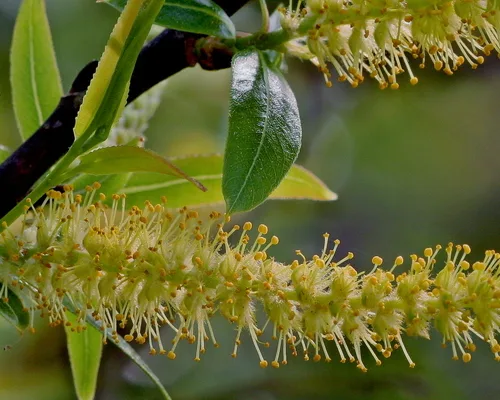
Carolina willow (Salix caroliniana) is a fast-growing woody tree/shrub native to moist areas across eastern North America. It forms flexible branches, spreads by rooting at the edges, and is built for wet ground where many plants fail. In permaculture, it’s a repair tool: strong roots stabilize banks and slopes, dense growth creates cooling shade, and fast leaf biomass becomes chop-and-drop mulch that keeps soil life humming. Full sun to partial shade; growth accelerates with bright light. Water-loving: performs best with consistently moist soil and can tolerate flooded edges. Prefers deep, fertile, well-aerated soils; avoid long dry spells once established. Handles wet seasons well; don’t plant where you only get occasional water. Cuttings: take dormant or semi-dormant cuttings and root them in moist media; roots often establish in 4–8 weeks. Suckers/layering: bend low shoots toward wet soil and keep contact until they root (often 2–3 months). Seeds: use cleaned seed quickly and sow after cold stratification; germination timing depends on temperature stability. Coppice for poles: cut for woven/woodwork in 1–3 years after establishment, then repeat on a rotation. Use leaves and small prunings as fodder or compost input whenever pruning happens. Harvest in cool parts of the day; avoid heavy cutting during extreme stress.
Permaculture Functions
- Erosion Control: roots explosively into saturated banks and pond margins, locking silt after floods -- while flexible stems bend instead of snapping when water tables swing.
- Water Retention: transpiring canopy and litter slow sheet flow so more rain infiltrates behind the thicket instead of racing downslope during wet-season pulses -- on clay.
- Shade Provider: fine leaves cast light shade over comfrey, elderberry, and livestock drinkers in moist edges -- where summer sun would otherwise flash-dry shallow pools.
- Animal Fodder: young leaves and twigs coppice into repeated browse or chip fodder cycles for goats and rabbits -- where managers rotate cuts to avoid bark girdling.
Companion Planting
- Rooting can push into drains, sidewalks, and foundations; keep a separation zone.