About
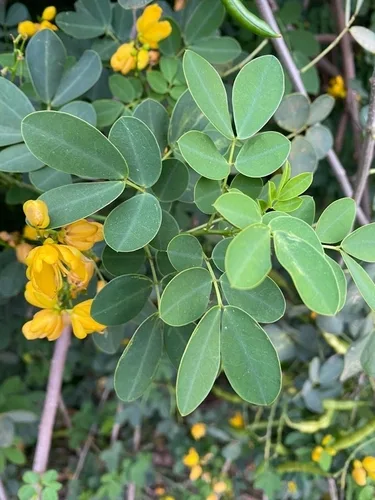
Butterfly cassia (Senna bicapsularis) is a fast-growing deciduous-to-semi-evergreen shrub in warm climates, smothered in bright yellow flowers during cool-season months when many plants are visually on strike. As a legume, it can contribute to soil-biology partnerships in diverse hedgerows; as a landscape plant it earns space by feeding Cloudless Sulphur and other sulphur butterflies that use Senna as host plants. Size it honestly—fast growth and heavy bloom mean regular pruning if paths must stay walkable. Full sun for maximum flower load; thin interior if mildew pressures show in humid air. Well-drained soil; tolerates drought once established but looks sharper with occasional deep watering. Hard freezes can kill stems to the ground in marginal zones; mulch protects crowns where resprouting is part of the plan. Seeds germinate warm and fast; scarify if dormancy stalls. Take cuttings from semi-hardwood in warm seasons with humidity support. Rejuvenate old plants by hard cutback after frost risk passes. This is primarily a habitat and ornamental shrub—harvest expectations are ecological, not pantry, unless you know local Senna food traditions and toxicity boundaries. If collecting seed for propagation, wait until pods brown and rattle honestly. Prune spent inflorescences if self-seeding becomes a neighborhood debate.
Permaculture Functions
- Pollinator: Senna bicapsularis opens thousands of yellow pea flowers during short-day months -- so honeybees pack pollen when goldenrod is absent in frost-free towns.
- Wildlife Attractor: Cloudless sulphur larvae chew leaves openly, turning shrubs into living butterfly nurseries -- if you stop spraying every chewed leaflet.
- Nitrogen Fixer: Fabaceous roots nodulate in warm soil, nudging available nitrogen upward -- in leaf tissue tests compared with non-legume hedge species on the same drip schedule.
- Border Plant: Fast upright stems hit 3 m in one wet season -- giving a quick privacy wall along chain link until slower evergreens fill in behind.
- Ornamental: Bare winter stems carry black pods like beads until you shear -- after last frost, signaling resprout drama worth a front-yard seat.
Companion Planting