About
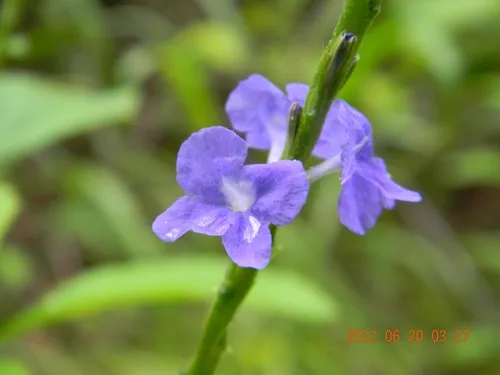
Blue porterweed (Stachytarpheta jamaicensis) is a low, spreading perennial of sandy coastal and disturbed ground in the subtropics and tropics, carrying slender spikes of small blue-purple flowers that keep visiting butterflies honest almost year-round in frost-free sites. It fills sunny gaps where turf pretends to be ecology, rooting easily from cuttings and self-seeding where winters stay mild. Traditional medicine uses enter local practice—verify identity and contraindications before you brew for guests. Full sun for tight growth and continuous bloom; shade stretches stems and reduces flowers. Tolerates drought once established; looks fresher with occasional deep watering in sand. Well-drained soil; tolerates poor fertility but not chronic bog. Cuttings root readily in warm, humid seasons. Seeds self-sow; thin volunteers to prevent monoculture boredom. Hard cutback after frost risk to refresh woody bases. If harvesting for documented herbal traditions, collect flowering tops in morning dryness and dry with airflow. Leave abundant bloom for skippers and hummingbirds if your goal is habitat, not jars. Deadhead only if local rules demand tidiness over seeds.
Permaculture Functions
- Pollinator: Stachytarpheta jamaicensis keeps rat-tail spikes of blue-purple tubes opening near ground level so tropical skippers and small bees feed -- without climbing tall stems.
- Wildlife Attractor: Hummingbirds work the same low tubes in coastal heat, and small lizards hunt gnats in the humid shade -- under the mat.
- Medicinal: Dried flowering tops enter Caribbean vervain traditions for teas and washes -- so positive ID to this species beats guessing among blue verbenas.
- Ground Cover: Woody bases resprout after hard cutback, rooting nodes that knit sandy beds and crowd out purslane -- along drip lines.
- Border Plant: Stays under knee height even in full sun -- giving a front edge along walks where taller porterweeds would arch into foot traffic.
Companion Planting
Threats & Pressure