About
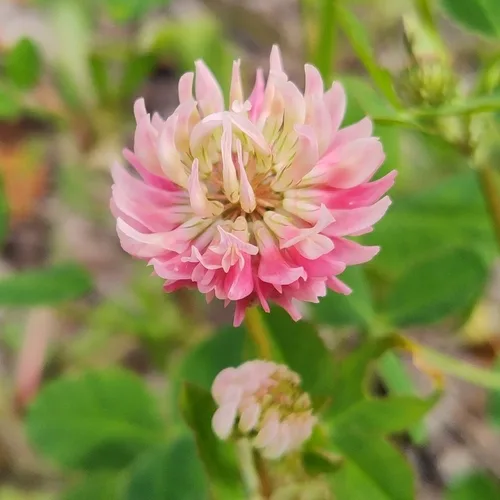
Alsike clover (Trifolium hybridum) is a perennial legume that forms a low, spreading mat of soft foliage and short flower heads, native to Europe and adapted across temperate grasslands and hay fields. It typically reaches about 20–60 cm (8–24 in) tall, making it useful as a living mulch in food systems. In permaculture, it turns “weeds that want to be soil” into nitrogen-rich biomass, covers bare ground during cool seasons, and feeds pollinators and grazing animals when managed as forage. Full sun to partial shade; it flowers best with consistent light. Moderate water for establishment; once rooted it tolerates short dry spells. Prefers well-drained loamy to sandy soils, but can handle moist edges better than many clovers. Avoid long waterlogged stretches to reduce crown decline. Seeds: surface-sow in early spring or early fall after soil warms to around 50°F (10°C); germination is often 5–10 days with steady moisture. Seedlings/transplant: start in trays, then transplant once seedlings are sturdy (about 4–6 weeks). Division: dig and split dense patches in cool seasons; replant immediately and keep evenly moist for 1–2 weeks. For forage: mow or cut when plants are 20–30 cm (8–12 in) tall and before bloom for best quality. For cover-crop mulch: cut or scythe shortly before seeds set, then leave residue as chop-and-drop. If you want seed, let stands flower and set pods; dry cut material in airflow and store cool and dry.
Permaculture Functions
- Nitrogen Fixer: Trifolium hybridum nodules fix atmospheric nitrogen into stolons and leaflets that tolerate wetter feet than many white-clover selections -- mow before heavy bloom if you want top growth folded into soil without hard seed rain.
- Mulcher: Frequent hay cuts or chop-and-drop cycles return soft legume residue that feeds earthworms under fruit trees -- biomass breaks faster than woody chips, so it fits tight rotations between heavy feeders.
- Ground Cover: Low pink-white flower heads and trifoliate leaves tile orchard alleys and rain-garden berms where taller covers would shade low crops -- avoid long anaerobic puddling that thins crowns on clay flats.
- Animal Fodder: Palatable tops make dairy-quality hay on cool sites -- watch photosensitivity risk in horses with pink skin eating large amounts of blooming alsike during bright weather, a documented clover quirk worth respecting.
Companion Planting