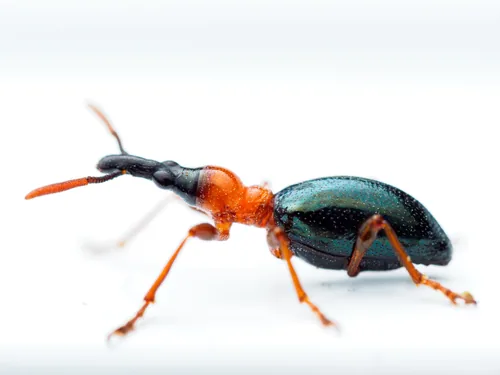
Field Identification
If plants are wilting, notching at the edges, or fruit and roots show hidden feeding damage, sweet potato weevil may be the cause. Adults chew above ground while larvae often feed out of sight inside soil, stems, or fruit. Damage builds quietly, then plants crash fast when roots are heavily hit. Act early so a small weevil problem does not become a season-long infestation.
Look for small beetles with a hard body and a distinct snout, usually active at dawn, dusk, or night. Check for crescent-shaped leaf notches, punctures in fruit, or tiny entry holes near stems. In soil or damaged tissue, larvae are often pale, legless, and curved in a C-shape. Fresh chew marks plus snout beetles or C-shaped grubs confirm active weevil pressure.
Not sure what you have? Use the symptom diagnosis tool →
How to Deal With It
Organic Control Methods
Ants prey on larvae and pupae near the soil surface when sweet potatoes crack open; predation is patchy. Entomopathogenic fungi infect weevils in moist soil but also attack roots if you overwater. Nematodes target pupae in soil when products and soil temperature align -- they are not a sprinkle-on-salt shaker for every field. Keep waterlogging separate from helpful moisture; rot is not biocontrol.
Eliminate wild morning glories and volunteer sweet potatoes near beds -- they bridge generations year-round. Inspect slips from certified sources; reject any with stem holes. Do not compost infested roots in warm climates unless piles reach high heat. Pheromone traps show when males fly; use counts to time harvest and sanitation, not hope.
Plant certified slips; rogue off-types often carry hidden injury. Deep-bury culls after harvest so larvae cannot emerge next season. Rotate fields away from Solanaceae and Ipomoea weeds for a full year when possible. Hill soil to cover exposed cracks where adults lay eggs at the soil line. Harvest on time and cure quickly; cracked skins invite new infestation in storage.
Pheromone traps capture males in small plots when combined with removal of wild hosts -- deploy traps as networks, not single buckets. Tillage that buries crop residue deeply can reduce pupae survival if timing matches local extension advice. Hand removal of volunteer vines along fence rows cuts immigration paths.
Steinernema carpocapsae nematodes applied to soil target pupae near harvest where labels permit -- soil must stay moist long enough for infection. Neem soil drenches show partial suppression in trials; combine with sanitation. Foliar sprays on adults work only during flight and require repeat after rain. No organic spray fixes roots already tunneled full of larvae; focus on clean slips and harvest timing.
Let Nature Handle It
Natural Enemies
- Predatory ants
- Entomopathogenic nematodes
- Entomopathogenic fungi
Threat Map