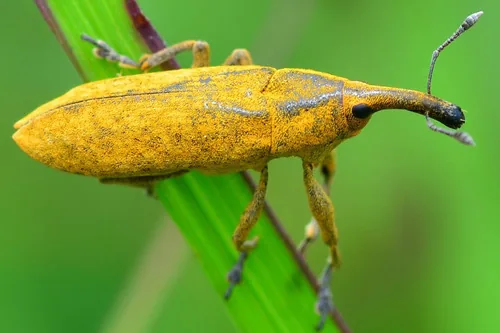
Field Identification
If new growth is curling, yellowing, sticky, or chewed, rhubarb curculio may already be on the plant. This pest often builds quietly, then damage appears all at once. Feeding stress weakens growth, reduces yield, and opens the door to secondary disease. Early cleanup is much easier than fighting a full population surge later.
Inspect the newest growth first: leaf undersides, flower buds, stem joints, and tender tips where pests gather. Look for body shape, color, eggs, cast skins, honeydew, webbing, or fresh puncture marks. A hand lens and a white paper tap test help reveal small life stages. Matching visible pests with fresh plant damage confirms active infestation.
Not sure what you have? Use the symptom diagnosis tool →
How to Deal With It
Organic Control Methods
Birds, ground beetles, and spiders pick off adult curculios when they climb stalks at dawn. Parasitic wasps attack some Lixus larvae inside stems of wild hosts; rhubarb is one stage of a bigger life story. These predators help only if you skip nightly pyrethrin across the whole yard -- survivors return faster than birds do.
Adults migrate from curly dock, sorrel, and rough wasteland into rhubarb -- scout margins weekly during first flight. Harvest outer rows first where immigration hits before inner rows. Mow or pull nearby dock before adults move; late removal turns dock into a weevil nursery.
Harvest stalks promptly and remove split stalks that hold moisture and eggs. Avoid heavy thatch under clumps where larvae hide. Improve airflow so stalks dry after rain; secondary rot follows weevil scarring. Rotate harvest paths so you do not always finish the weevil side last.
Shake stalks into soapy water on cool mornings when adults drop instead of flying. Row covers on small spring clumps block migration peaks if hoops fit -- remove before heat stresses plants. Hand-pick adults at dusk with a headlamp on small patches.
Pyrethrin or neem on stalks and surrounding dock patches during adult activity -- focus evenings when weevils climb to feed. Repeat after rain; short residual means timing beats brand. Avoid spraying open flowers if rhubarb bolts for seed. Combine sprays with dock removal; sprays without habitat work fail.
Let Nature Handle It
Natural Enemies
- Birds
- Ground Beetles (Carabidae)
- Parasitic Wasps
Threat Map