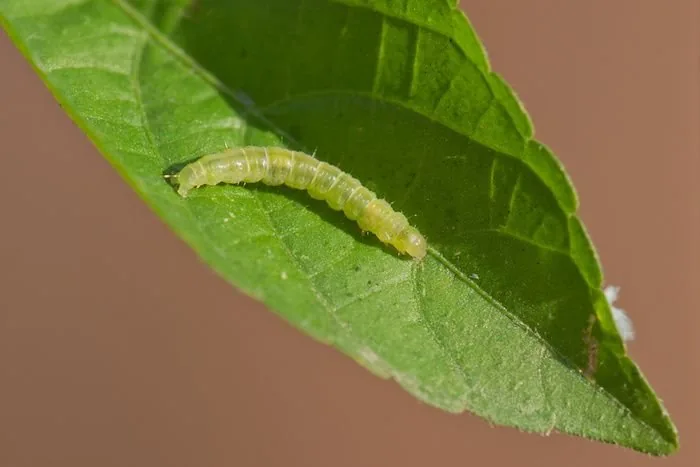
Field Identification
If new growth is curling, yellowing, sticky, or chewed, leafrollers may already be on the plant. This pest often builds quietly, then damage appears all at once. Feeding stress weakens growth, reduces yield, and opens the door to secondary disease. Early cleanup is much easier than fighting a full population surge later.
Inspect the newest growth first: leaf undersides, flower buds, stem joints, and tender tips where pests gather. Look for body shape, color, eggs, cast skins, honeydew, webbing, or fresh puncture marks. A hand lens and a white paper tap test help reveal small life stages. Matching visible pests with fresh plant damage confirms active infestation.
Not sure what you have? Use the symptom diagnosis tool →
How to Deal With It
Organic Control Methods
Trichogramma egg parasitoids attack leafroller eggs before they hatch — the most effective biological intervention point. Release weekly during adult flight periods. Braconid and ichneumonid wasps parasitize larvae inside rolled leaves. Lacewing larvae and minute pirate bugs eat eggs and young larvae. Support all of these with dill, fennel, and sweet alyssum nearby. Birds actively pry open rolled leaves to extract larvae — habitat for insectivorous birds near orchards and gardens provides continuous pressure on leafroller populations. Diverse plantings with minimal pesticide use allow natural enemy communities to regulate leafroller populations without intervention.
Leafrollers are larvae of small tortrix moths — the rolled or tied leaf is where the larva lives and feeds, protected from contact sprays and most predators. By the time you see rolled leaves the larva is already inside and protected. Prevention focuses on killing eggs before they hatch and young larvae before they roll leaves. Pheromone traps for key leafroller species monitor adult flight and indicate spray timing windows. Sticky trunk bands on fruit trees catch adult moths crawling to lay eggs.
Prune out and destroy rolled leaves when found — crush the larva inside rather than just dropping the leaf, which allows emergence. Remove overwintering sites — leafroller pupae overwinter in bark crevices, rolled leaves on trees, and garden debris. Dormant season sanitation dramatically reduces the following year population. Maintain diverse flowering plants in and around orchards to support parasitoid wasp communities that track leafroller populations.
Hand-crush rolled lquick and eliminates the larva without chemical input. Works well in small gardens and orchards. Row covers over young plants during adult flight prevent egg-laying. Yellow sticky traps capture adult moths for monitoring. Dormant oil applied to fruit trees in late winter smothers overwintering eggs and pupae in bark crevices before they hatch.
Bt kurstaki applied at egg hatch and on young larvae before they roll leaves is the most effective spray timing — once inside rolled leaves larvae are protected from contact sprays. Apply every 5-7 days during egg hatch period. Spinosad has activity that reaches larvae partially protected inside rolls — more effective than Bt on established infestations. Neem oil disrupts larval development and deters egg-laying. Apply all sprays in late afternoon when larvae are most active.
Let Nature Handle It
Natural Enemies
- Parasitic Wasps
- Lacewings
- Predatory Beetles
Threat Map