About
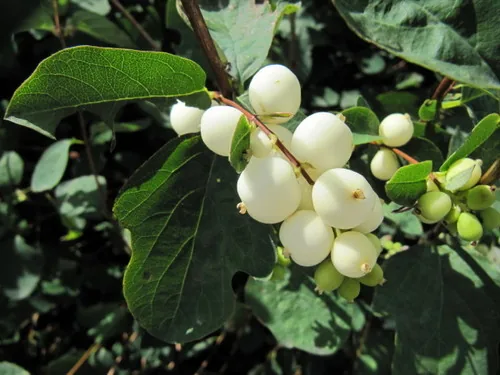
Common snowberry (Symphoricarpos albus) is a suckering deciduous shrub from North America, famous for chalk-white berries that hang into winter like nature’s cheap pearls. Arching stems carry simple opposite leaves and small pink flowers, maturing around 3–6 feet tall and wider by underground runners in moist soils. Heat and relentless humidity are not this plant’s love language. In warm lowlands it is, at best, a trial for collectors in cool microclimates; true tropical lowlands are a hard no for long-term success. If you insist, picture it as a temporary novelty, not a backbone species. Part sun to light shade in warm areas; full sun only where summers stay mild. Evenly moist, well-drained humus; avoid baking sand without irrigation and organic matter. Softwood cuttings in early summer; keep humidity high until roots callus and hold. Dig suckers in dormancy with some roots attached; replant immediately and mulch the crown. Berries are wildlife food, not a human snack—do not confuse “pretty” with “salad.” Prune out old stems after fruiting display if you want tidy thickets; leave structure for nesting birds.
Permaculture Functions
- Wildlife Attractor: Symphoricarpos albus persistent white drupes carry saponins birds tolerate -- while waxwings work hedgerows after hard frost strips softer fruit.
- Erosion Control: Suckering roots knit riparian sand and road-cut spoil -- where moisture stays honest through summer draws.
- Ornamental: Ghost berries hang against bare twigs all winter for designers who plan structure -- before flower catalogs arrive.
Companion Planting
Also mentioned as companions:
- Red Osier Dogwood
Not yet profiled in PermiePortal
- Hot dry exposed parking strips in the subtropics
- Walnut
Threats & Pressure