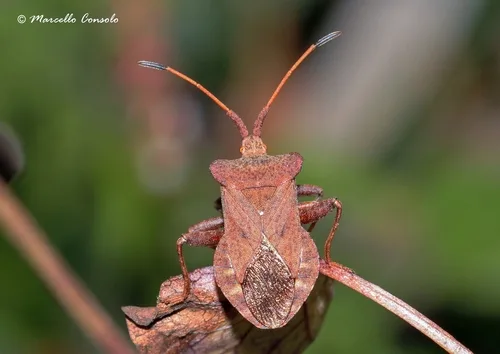
Field Identification
Leaf-footed bugs are elongate true bugs with often widened hind tibiae on many species. They pierce fruit, seeds, and stems to feed, causing dimpling, discoloration, and premature drop. Nymphs sometimes aggregate in clusters on stems. They are common on tomatoes, peppers, squash, citrus, and nuts from temperate gardens through subtropical orchards.
Adults have long antennae and a visible proboscis folded under the head. Look for nymphs with dark bodies and orange or red markings on some species. Damage on fruit shows pale corky spots under the skin. Distinguish from stink bugs by body shape and leg expansions -- both are pentatomoid lineages but field guides separate them quickly with photos.
Not sure what you have? Use the symptom diagnosis tool →
How to Deal With It
Organic Control Methods
Egg parasitoids such as Trissolcus and Gryon spp. attack stink bug and some coreid eggs when present in diverse farms. Assassin bugs and spiders prey on nymphs. Avoid killing all wasps at random -- many are parasitoids or non-pests. Provide small-flower nectar sources at field margins for parasitoid adults.
Remove weedy winter hosts near vegetable blocks where adults overwinter. Harvest fruit promptly to reduce feeding sites. Use row cover on young transplants until flowering if pollination allows. Inspect seed heads of ornamental grasses where some species aggregate.
Hand crush nymph clusters early in morning when they move slowly -- wear gloves because some species smell foul. Shake canes over soapy water in home orchards to drop adults. Prune congregation sites on perennial sunflowers if they harbor breeding populations next to tomatoes.
Row cover after pollination is not viable, so switch to fruit sleeves on high-value tomatoes if feasible. Sticky traps on posts catch some adults but also non-targets -- use sparingly. Bird predation helps at margins but not inside dense canopies.
Pyrethrin or azadirachtin applications can reduce nymphs when timed to cluster stages -- always check organic approval and preharvest intervals on food crops. Soap sprays work on soft nymphs with excellent coverage. Avoid spraying open flowers visited by bees.
Let Nature Handle It
Natural Enemies
- Parasitic Wasps
- Assassin Bugs
- Spiders
Threat Map