Field Identification
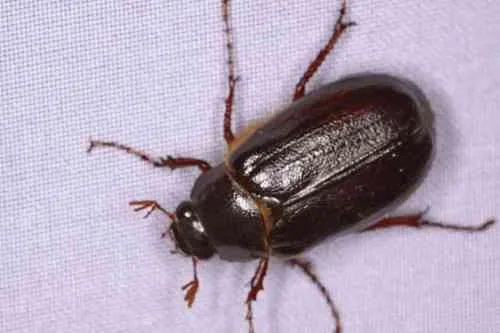
June beetle grubs are large white scarab larvae with brown heads and three pairs of thoracic legs, arranged in a loose C in soil. They feed on grass roots, row crop roots, and sometimes tubers, causing irregular brown turf patches and stand thinning. Adults are chunky brown beetles that bump porch lights in late spring and early summer across much of North America. Damage is worst where adults lay eggs in moist turf near lights and irrigated lawns.
Open sod and count grubs per square foot at the margin of dead patches -- thresholds vary by grass species and maintenance level. Raster pattern on the terminal segment helps separate Phyllophaga from masked chafer grubs. Birds pecking holes signal high populations. Distinguish from crane fly leatherjackets by the obvious head capsule and legs on scarabs.
Not sure what you have? Use the symptom diagnosis tool →
How to Deal With It
Organic Control Methods
Heterorhabditis bacteriophora nematodes infect white grubs in warm moist soil when applied at label rates with immediate irrigation. Metarhizium anisopliae products are labeled in some regions for scarabs. Ground beetles and ants prey on eggs. Avoid prophylactic lawn sprays that remove predators before scouting confirms grub density.
Turn off excessive outdoor lighting during peak adult flight to reduce egg laying on nearby turf. Maintain moderate nitrogen so grass recovers from partial root pruning. Overseed thin areas in fall to close canopy gaps. Rotate ground covers in landscape beds if grubs persist under the same shrubs year after year.
Raise mowing height during summer stress to increase rooting volume. Core aerate compacted lawns so water infiltrates instead of puddling. For vegetable gardens, delay planting sensitive crops until you have tilled or solarized known hot spots when rotation allows.
Solarize future garden beds during renovation windows. Hand pick grubs when preparing planting holes in small beds. Roll back sod strips on localized infestations and let birds work, then reseat sod after grub removal if feasible.
Nematode applications remain the backbone of organic grub control with good timing. Neem soil drenches show variable lab results. Pyrethrin-based lawn products may exist for rescue treatments but check organic certification and non-target impacts. Always irrigate after nematode application so carriers reach the root zone.
Let Nature Handle It
Natural Enemies
- Nematodes
- Ground Beetles
- Birds
Threat Map