Field Identification
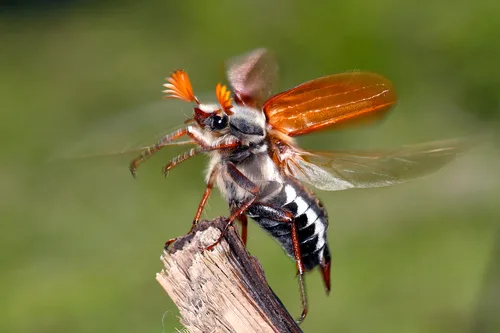
Chafer grubs are creamy white scarab larvae with brown heads and legs arranged in a C-shape, living in soil and feeding on roots. Turf browns in irregular patches that lift like loose carpet when grubs sever stolons. Adult chafers are often nocturnal beetles seen around porch lights during emergence flights. Damage peaks in warm months across temperate lawns, pastures, and vegetable beds with high organic matter.
Dig a square foot at the edge of a dead patch and count grubs -- thresholds vary by grass type and irrigation. Chafer species differ in raster pattern on the tail end, which specialists use for ID. Birds pecking holes in turf is a secondary sign of high grub loads. Distinguish from billbugs by the presence of obvious thoracic legs and the C-shaped body compared with legless billbug larvae inside stems.
Not sure what you have? Use the symptom diagnosis tool →
How to Deal With It
Organic Control Methods
Heterorhabditis bacteriophora nematodes infect white grubs in warm soil when irrigated in immediately after application. Beauveria bassiana and Metarhizium anisopliae products are labeled for scarabs in some regions. Ants and ground beetles eat eggs and small larvae at the soil surface. Avoid calendar sprays that kill beneficials before you confirm grub density crosses action thresholds.
Endophytic turf grasses reduce feeding damage for some chafer species -- buy certified seed. Avoid excessive irrigation during adult flight if extension maps show your area is at risk for outbreak years. Rotate ground covers in landscape beds if grubs recur under the same woody plants. Clean up fallen fruit that attracts egg-laying adults near beds.
Aerate compacted lawns so roots recover faster after partial root pruning by grubs. Raise mowing height to increase rooting depth and tolerate more feeding before visual browning. Overseed thin areas in fall with competitive grass blends. In vegetable gardens, till fall beds where rotation allows to expose larvae to birds, balancing erosion and organic matter goals for your site.
Solarizing a small future garden bed before planting reduces grub counts but kills soil life broadly -- use when renovating. Hand picking grubs while preparing planting holes is slow but free. For potted plants, sift old mix through hardware cloth and refresh media if grubs appear.
Entomopathogenic nematodes are the primary organic intervention with consistent research support when applied correctly. Neem soil drenches have variable efficacy on scarabs and may affect non-target soil insects. Pyrethrin drenches are not universally organic-certified -- check labels. Focus timing on early instar grubs for any product class.
Let Nature Handle It
Natural Enemies
- Ground Beetles
- Nematodes
- Ants
Threat Map