About
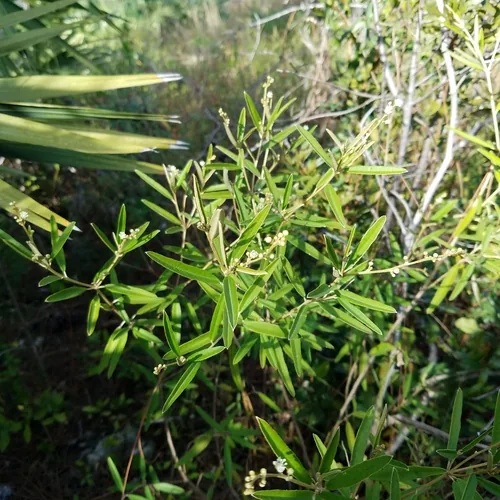
Pineland croton (Croton linearis) is a wiry subtropical shrub of sandy scrub and pineland edges, with narrow aromatic leaves, inconspicuous flowers, and a habit that reads as silver-green texture more than flower fireworks. Plants typically reach 2–5 feet (0.6–1.5 m), often broader than tall, rooting where drainage is sharp and organic matter is humble. In restoration and xeric food forests it stabilizes sand, feeds specialist insects, and marks dry boundaries without irrigation entitlement. Full sun for densest growth and silver leaf color; leggy in shade. Extremely well-drained sandy or rocky soils are native truth; wet clay is a slow funeral. Drought-tolerant once established; occasional deep watering in extreme dry seasons keeps foliage from browning at tips. Sow fresh seed after scarification trials; germination can be irregular. Take semi-hardwood cuttings in warm months with bottom heat. Prune lightly after flowering waves to keep plants compact along paths. Primarily a functional and wildlife plant—avoid casual internal use of Euphorbiaceae sap. Collect seed when capsules split if expanding restoration patches. Growth flushes follow warm wet periods rather than temperate spring calendars.
Permaculture Functions
- Wildlife Attractor: Croton linearis resinous foliage hosts scrub-specialist moths and small native bees that ignore double-flowered suburb nonsense -- plant wide bands if you want measurable insect biomass, not single token twigs.
- Erosion Control: Wiry roots knit deep Lakeland sand on cuts, trail berms, and restored scrub after mechanical disturbance -- tolerates fire-return ecosystems where irrigation would cheat the design ethic.
- Border Plant: Low silver mounds edge xeric paths, parking islands, and firewise defensible-space rings without demanding sprinkler loyalty -- Euphorbiaceae sap means gloves on hard pruning days.
- Ornamental: Narrow gray-green leaves contrast against coarser saw palmetto and sand live oak textures -- flowers stay inconspicuous; value is honest foliage architecture, not blossom fireworks.
Companion Planting
- Euphorbiaceae sap — skin and eye irritant; gloves when pruning hard
- Wet clay and heavy mulch on crowns — rot in humid cool spells
Threats & Pressure