About
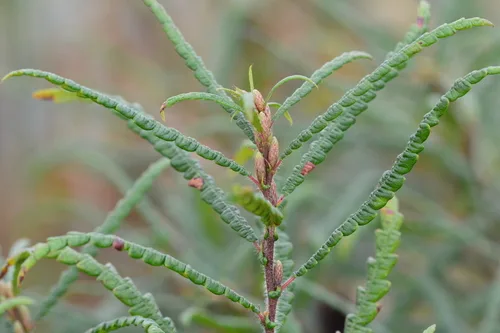
Sweetfern (Comptonia peregrina) is a nitrogen-fixing shrub of northeastern North American sandy and rocky soils, with fern-like aromatic leaves and inconspicuous catkins. Plants spread by rhizomes into colonies typically under 1 meter (3 feet) tall, thriving where pines and oaks dominate. It is not a true fern despite the name. It suits erosion-prone pine barrens, edible forest edges, and wildlife corridors where acidic, low-nutrient soils limit other shrubs. Full sun to partial shade; dry, infertile sands match ecology. Avoid lime-heavy soils that conflict with ericaceous associates. Transplant young suckers in early spring, or grow from stratified seed with patience. Container liners establish faster than bare taproots. Leaves are used for tea where traditions support safe harvest; test small amounts first because sensitivities vary.
Permaculture Functions
- Nitrogen Fixer: Actinorhizal root nodules fix atmospheric nitrogen on poor sands -- feeds neighboring blueberries and pines without synthetic inputs when designed as guild members.
- Wildlife Attractor: Cover for ground-nesting birds; catkins feed early insects -- integrate into savanna edges rather than monoculture blocks.
- Erosion Control: Rhizomes stabilize disturbed cuts in pine systems -- pairs with native grasses that tolerate partial shade.
- Ground Cover: Low stature and spreading habit exclude annual weeds once closed -- useful under high canopy where turf fails.
- Dynamic Accumulator: Scavenges scarce nutrients and cycles them through leaf drop -- mulch in place with acid-loving companions.
Companion Planting
Threats & Pressure