About
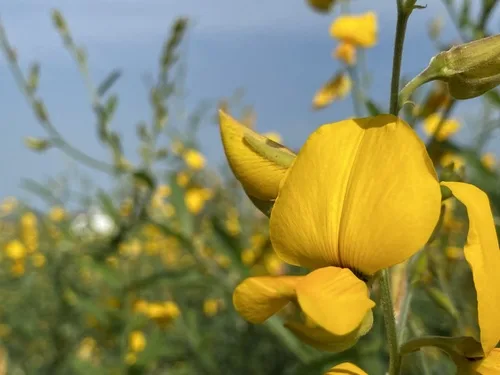
Sunn hemp (Crotalaria juncea) is a fast-growing warm-season legume cultivated as a green manure and soil-improving cover crop. Native to warm tropical and subtropical regions, it is widely used because it establishes quickly, produces abundant biomass, and enriches soil fertility through nitrogen-fixing roots. Plants typically reach 1–2.5 m (3–8 ft) tall with upright stems and yellow to golden flowers. In permaculture, sunn hemp matters because it turns heat-driven “idle soil” into a nitrogen-rich mulch system that protects the surface and improves the next planting window. Full sun for fastest growth; shade slows it down dramatically. Moderate water helps germination and early establishment; once established it tolerates warm-season drought well. Prefers well-drained soil; waterlogged beds reduce performance. Dislikes cold snaps; cold can stall growth or kill young stands. Seeds (warm sow): direct-seed in late spring or early summer when soil is warm; germination commonly takes 3–7 days. Relay sow: reseed into spaces between rows or after mowing to keep continuous cover. Pre-soak seeds (optional): soak 8–12 hours to speed emergence when conditions are marginal. Cut/mow for green manure around 6–8 weeks when biomass is high but before seed pods toughen. Leave residues as surface mulch; avoid deep turning so soil biology stays active. If you want flowers for beneficial insects, leave a small portion to bloom while mowing the main stand.
Permaculture Functions
- Nitrogen Fixer: Crotalaria juncea cover-crop genetics bank rhizobial nitrogen for the corn or brassica following -- if you flail-mow before seeds mature into toxic pods.
- Mulcher: Succulent stems compost fast -- juice through roller-crimpers ahead of winter rye seeding to release nitrogen without tillage.
- Erosion Control: Fibrous lateral roots armor highway cuts and orchard middles against summer cloudbursts -- on sandy Coastal Plain soils.
Companion Planting