About
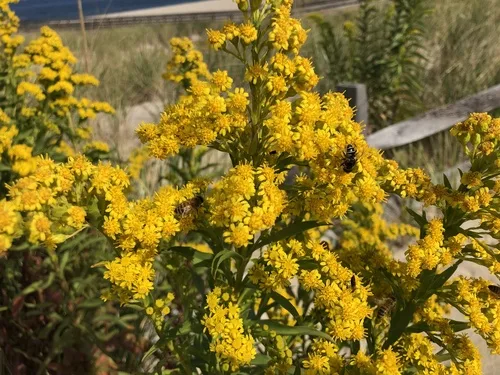
Seaside goldenrod (Solidago sempervirens) is a coastal species with evergreen basal leaves, smooth stems, and bright yellow plumes in late summer and fall. Plants tolerate salt spray, periodic inundation, and sandy soils, often forming clumps 30 to 100 cm (1 to 3 feet) tall along dunes and upper salt marshes. It is a key late-season forb for pollinators on eastern North American shorelines. It suits dune stabilization plantings, brackish rain gardens, and coastal meadow mixes where salinity fluctuates seasonally. Full sun and sandy, well-drained soils match ecology; occasional salt spray is tolerated better than road salt in some settings, but test local conditions. Divide crowns in cool, moist weather, or sow seed outdoors in fall. Container plugs transplant well during mild seasons. Leave seed heads for birds; cut back in late winter if tidy aesthetics require, after overwintering insects emerge.
Permaculture Functions
- Pollinator: Late nectar supports migrating monarchs and coastal bee guilds -- pairs with asters for sequential bloom along migration routes.
- Erosion Control: Fibrous roots bind foredune sand -- use behind pioneer grasses where salt exposure matches ecotype.
- Wildlife Attractor: Seeds feed songbirds; stems shelter insects -- retain stalks in habitat-focused zones.
- Ornamental: Evergreen leaves provide winter structure in mild climates -- flowers add late color when many shrubs are foliage-only.
- Dynamic Accumulator: Rapid growth cycles nutrients in sandy soils -- chop-and-drop with species screened for local salinity tolerance.
Companion Planting