About
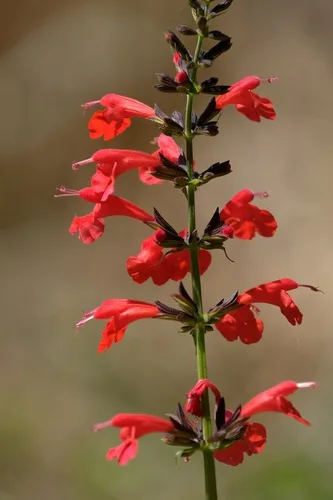
Scarlet sage (Salvia coccinea) is a warm-climate salvia with bright red, pink, or white tubular flowers in whorls along square stems and softly hairy, heart-shaped leaves. Plants behave as short-lived perennials or self-sowing annuals depending on frost, typically 30 to 90 cm (1 to 3 feet) tall. It colonizes disturbed edges and garden beds across the southern United States and into Latin America. It suits frost-free butterfly gardens, annual borders in temperate zones, and container displays moved indoors where winters are cold. Full sun to light shade; fertile, well-drained soil with moderate moisture supports continuous bloom. Reduce water during short days to limit root rot in containers. Sow seed indoors before last frost in cool climates, or direct-sow after soil warms. Tip cuttings root easily in humid air during warm weather. Deadhead to reduce self-seeding where naturalizing is unwanted; allow seed in restoration-style beds to feed finches.
Permaculture Functions
- Ornamental: Long-season red tubes at accessible heights suit pathway color -- pairs with silver foliage for contrast in subtropical designs.
- Pollinator: Nectar feeds hummingbirds and long-tongued bees -- cluster in sun for reliable visitation patterns.
- Wildlife Attractor: Seeds feed small birds when allowed to mature -- balance aesthetics with habitat goals on each bed edge.
- Border Plant: Soft mounds edge beds without thorns -- defines lines near seating when maintained for compact form.
- Ground Cover: Self-sowing fills gaps in warm climates -- manage spread if designs require strict geometry.
Companion Planting
Threats & Pressure