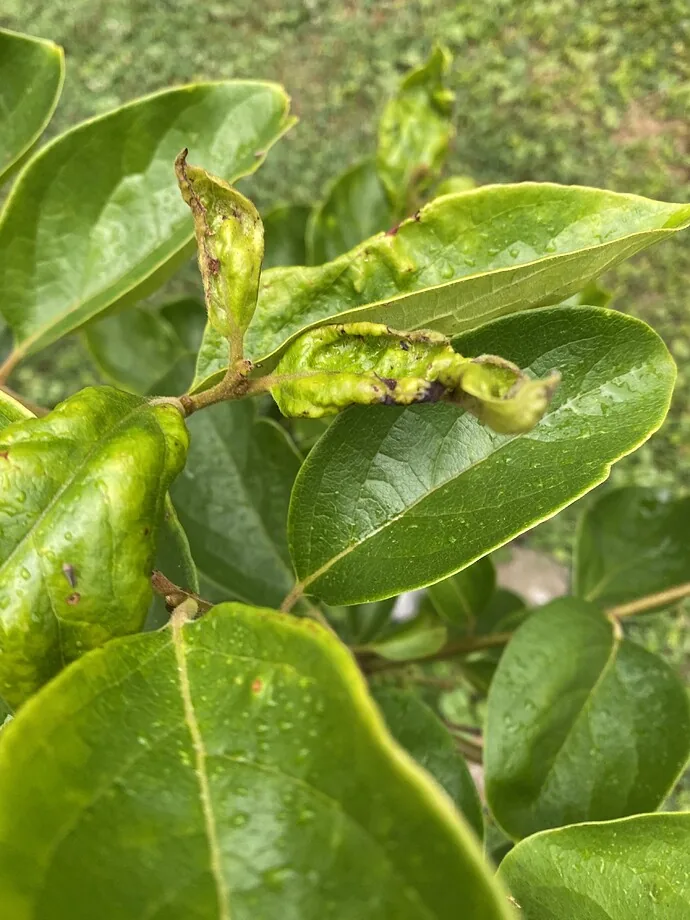
Field Identification
If new growth is curling, yellowing, sticky, or chewed, persimmon psylla may already be on the plant. This pest often builds quietly, then damage appears all at once. Feeding stress weakens growth, reduces yield, and opens the door to secondary disease. Early cleanup is much easier than fighting a full population surge later.
Inspect the newest growth first: leaf undersides, flower buds, stem joints, and tender tips where pests gather. Look for body shape, color, eggs, cast skins, honeydew, webbing, or fresh puncture marks. A hand lens and a white paper tap test help reveal small life stages. Matching visible pests with fresh plant damage confirms active infestation.
Not sure what you have? Use the symptom diagnosis tool →
How to Deal With It
Organic Control Methods
Lady beetles, lacewing larvae, minute pirate bugs, and parasitic wasps attack persimmon psylla nymphs when honeydew draws them in -- skip broad pyrethrin during early nymph waves or you farm psylla alone. Syrphid larvae cruise sooty mold lanes. Support predators with flowering understory plants that bloom when persimmons are still bare twigs.
Adults move to swelling buds in spring -- scout weekly from silver tip until leaves harden. Flip leaves before honeydew drips; sticky mess means you are late. Flag trees that were coated last year; walk those first. Do not import nursery stock with tight curls without quarantine.
Prune out heavily infested water sprouts and crowded interior branches so sprays or predators reach leaf undersides. Remove suckers that act as eternal soft tissue. Open the canopy so inner leaves dry after dew. Avoid heavy nitrogen that pushes endless flushes; each flush is a new Psylla nursery.
Yellow sticky cards in the canopy catch adults for monitoring; they are not total control. Fine mesh sleeves on young scaffold branches are rare but possible on small trees. A stiff water blast dislodges young nymphs before they settle into honeydew cups.
Insecticidal soap and neem target soft nymphs on contact -- add spreader and cover leaf undersides. Spray when crawlers move onto fresh leaves; adults under bark laugh at soap. Kaolin clay repels ovipositing adults if you keep uniform film. Spray at dusk to spare bees on open flowers. Reapply after rain.
Let Nature Handle It
Natural Enemies
- Ladybugs
- Lacewings
- Parasitic Wasps
Threat Map